
SUNLU S1 Plus
4.3Editor score
Fan-assisted drying
2 inch LCD screen
Wide material compatibility
This guide compares the top ten filament dryers for 3D printing to help you choose the best storage and drying solution for your printer filament needs.
Moisture is the hidden enemy of successful 3D printing, causing stringing, clogging, and weak layer adhesion. A dedicated filament dryer ensures your materials stay dry during storage and printing for consistent results.
We analyzed ten top-rated models based on capacity, heating technology, temperature control, and user feedback. Each selection offers unique features suited for hobbyists and professionals seeking reliable moisture protection.
Every pick includes detailed pros and cons to help you decide quickly. Prices and availability change often, so check current listings before purchasing to ensure you get the best deal available now.
4.3Editor score

4.6Editor score

4.5Editor score
This side-by-side comparison highlights key specifications for all ten selected dryers. Reviewing these details helps you match the right model to your specific printing requirements.



The Creality Space Pi X4 stands out as a top choice for high-volume printing environments. It boasts a 4.6 rating and features dual independent heating chambers that significantly speed up drying.
We may earn a commission when you buy through this link, at no additional cost to you.
Its dual 200W heating chambers allow it to reach up to 85°C, which is essential for materials like ABS and nylon. The spacious design holds four standard 1kg spools efficiently.
The main trade-off is the cost, which is higher than basic single-spool dryers. However, the increased capacity and speed justify the investment for serious users needing reliable filament management.
Ideal for professionals or serious hobbyists, this model ensures your filament remains moisture-free. It combines speed and storage capabilities effectively, making it the best overall pick.
Dual heating chambers remove moisture 30% faster than standard single-chamber units, ensuring print-ready filament in hours.
The 85°C maximum unlocks advanced filament drying that lower-temperature models cannot support safely.
We may earn a commission when you buy through this link, at no additional cost to you.
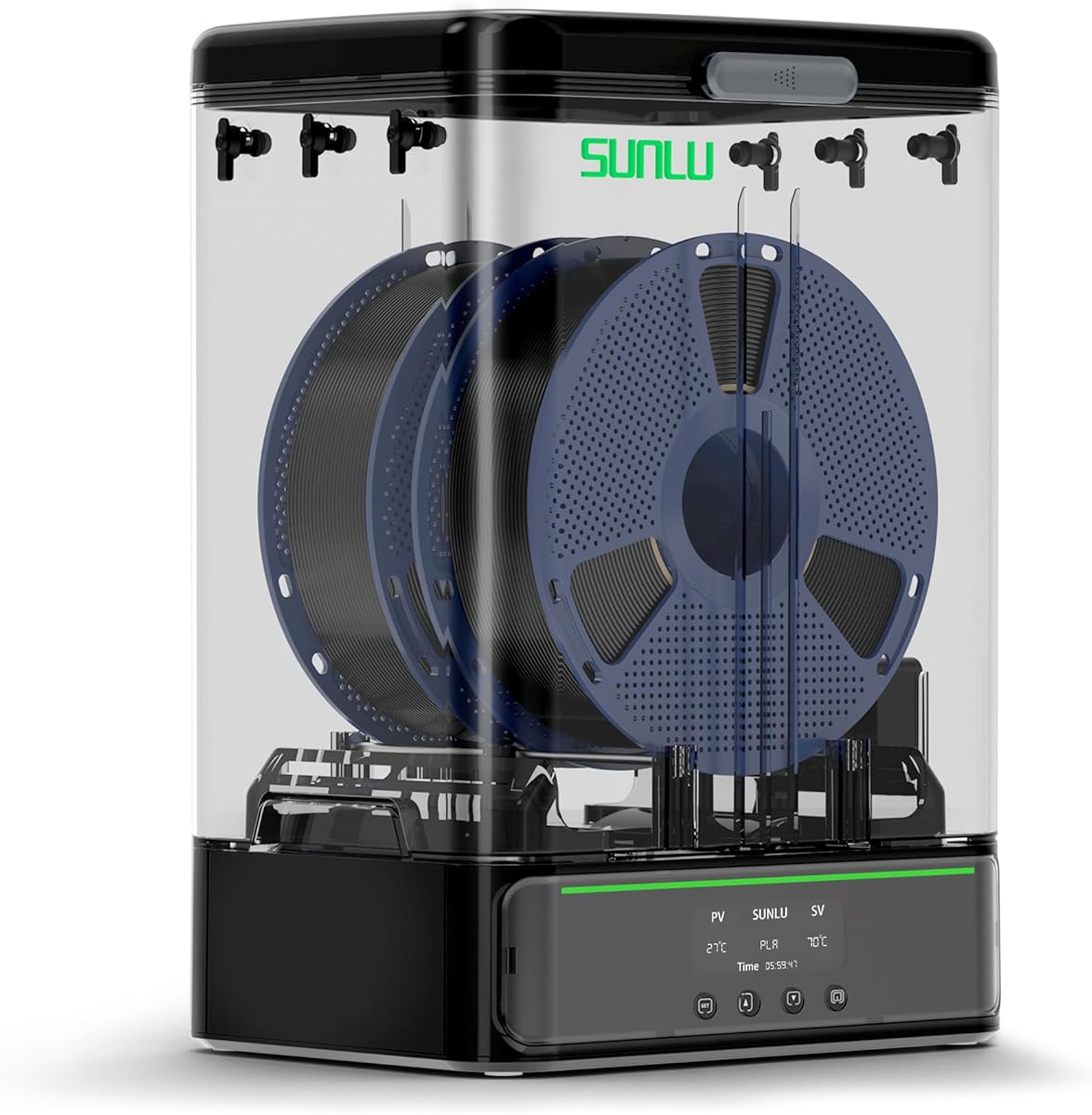
The SUNLU S1 Plus offers an excellent entry point for users seeking effective moisture control without breaking the bank. It holds a 4.3 rating and features a unique fan design.
We may earn a commission when you buy through this link, at no additional cost to you.
The added fan speeds up moisture discharge significantly compared to passive heaters. Its 2-inch LCD screen displays temperature, time, and humidity for easy monitoring during operation.
Users may find the temperature range slightly limited compared to premium models. However, it covers the most common materials well, making it a solid functional choice.
If you need a reliable dryer for general PLA and PETG, this model fits perfectly. It balances cost and performance effectively for most home printing needs.
The fan design accelerates drying by moving heated air more actively around the spools.
Adjustable settings allow users to tailor drying conditions to specific environmental factors.
We may earn a commission when you buy through this link, at no additional cost to you.
The SUNLU S4 is designed for users who demand maximum flexibility and power. With a 4.5 rating, it features a robust 350W PTC heater and three circulation fans.
We may earn a commission when you buy through this link, at no additional cost to you.
Its eight filament exit holes allow multiple printers to feed simultaneously from one unit. This high capacity makes it perfect for shared workspaces or large studios.
The size is substantial, requiring significant space on a desk or table. The weight is also notable, making it less portable than smaller units.
For those needing a centralized drying hub, this is the ideal solution. It delivers consistent, even drying across multiple spools efficiently and reliably.
The 350W heater provides 50% higher efficiency than previous models for faster warm-ups.
Eight outlets allow various loading angles for smoother feeding to different printer setups.
We may earn a commission when you buy through this link, at no additional cost to you.
The Comgrow SH01 is a practical choice for keeping filament dry during standard printing tasks. It has a 4.4 rating and a large inner size capable of holding two spools.
We may earn a commission when you buy through this link, at no additional cost to you.
Its sealed design ensures moisture does not re-enter when not in use. The silicone sheath and Teflon tube help prevent tangles and feeding issues effectively.
The temperature cap at 50°C might limit high-temp materials. Additionally, the auto shutdown feature requires care during longer printing sessions to avoid interruption.
Best for those printing mostly PLA or PETG, it offers reliable performance. The balance of storage and drying makes it a strong contender for everyday use.
The snap button structure ensures good sealing performance when the device is not actively drying.
Real-time monitoring of temperature and humidity keeps you informed of internal conditions.
We may earn a commission when you buy through this link, at no additional cost to you.
The Creality Space PI Plus offers a user-friendly interface with a large touch screen. It earns a 4.4 rating and uses PTC heating technology for uniform air distribution.
We may earn a commission when you buy through this link, at no additional cost to you.
With 12 preset options, it simplifies setup for various filament types. The 360-degree hot-air circulation ensures even drying across the spool without hot spots.
The wattage is lower than some competitors, potentially slowing the initial heat-up phase. It also holds fewer spools than larger models like the X4.
Ideal for users wanting simplicity and good results, this model works well. The touch interface adds a modern touch to standard drying functionality effectively.
One-key temperature settings for 12 filament types reduce setup effort significantly.
A 3.7-inch screen allows easy switching between Celsius and Fahrenheit units.
We may earn a commission when you buy through this link, at no additional cost to you.
The Polymaker Polydryer focuses on a connected solution for drying and storage. It has a 4.3 rating and helps maintain dry conditions before and during use.
We may earn a commission when you buy through this link, at no additional cost to you.
A built-in hygrometer allows you to track humidity levels without guesswork. This feature supports better day-to-day management of filament quality over time.
The drying dock promotes even airflow for consistent results. However, specific heating power details are less prominent than in other brands.
If you want a complete package including storage, this is excellent. It helps lock in dry conditions between prints, saving money on wasted filament.
The hygrometer helps track internal conditions so you know when filament is truly dry.
Combining heated drying with sealed storage protects your filament investment effectively.
We may earn a commission when you buy through this link, at no additional cost to you.
The Creality Space Pi SE is a straightforward dryer designed for easy use. With a 4.3 rating, it features insulation to keep heat and reduce scalding risks.
We may earn a commission when you buy through this link, at no additional cost to you.
It heats up to 65°C quickly, solving issues like clogging and drawing. The humidity monitor helps you track conditions precisely for better print quality.
Control is simplified to a knob and display, which may lack precision for some users. It is also limited to one standard spool at a time.
Best for single-printer setups, this unit delivers effective moisture removal. The insulation ensures safety while keeping energy use efficient during operation.
Added thermal cotton on inner walls maintains warmth and prevents accidental burns during use.
No assembly is required, allowing you to start drying immediately after unboxing.
We may earn a commission when you buy through this link, at no additional cost to you.
This variant of the SUNLU S4 offers high capacity and efficiency for serious users. It has a 4.6 rating and matches the power of the standard model.
We may earn a commission when you buy through this link, at no additional cost to you.
The 350W heater and three fans ensure consistent temperature throughout. Eight exit holes provide flexibility for complex printing setups.
The dimensions are large, which may challenge smaller workspaces. It requires significant clearance for optimal airflow around the vents.
For those needing to dry many spools at once, this is ideal. It supports a wide range of materials effectively.
The 350W PTC heater offers significantly higher efficiency for faster drying times.
Users can modify this unit to dry 3kg large rolls or use as a shoe dryer.
We may earn a commission when you buy through this link, at no additional cost to you.
The SUNLU SP2 is a versatile unit designed to handle large spools. It holds a 4.4 rating and can accommodate rolls up to 3kg.
We may earn a commission when you buy through this link, at no additional cost to you.
Heating is fast with a 250W PTC element reaching 70°C in 15 minutes. A HD LCD touch screen makes control straightforward and user-friendly.
It can be detached for storage use, which adds flexibility. However, the size might be a constraint for small desks.
Ideal for users with bulk spools, this dryer handles them efficiently. It keeps filaments dry and ready for use consistently.
Rollers hold different sized spools including large 3kg rolls effectively.
The 15-minute heat-up is much faster than standard heating methods.
We may earn a commission when you buy through this link, at no additional cost to you.
The SUNLU S2 is a straightforward device for keeping filament dry. It has a 4.3 rating and is designed to reduce moisture-related issues like brittleness.
We may earn a commission when you buy through this link, at no additional cost to you.
Its built-in spindle ensures the filament spins continuously for even exposure to heat. This prevents hot spots and ensures uniform moisture removal.
It is simple to use but lacks advanced features like humidity monitoring. For basic drying needs, it remains effective and reliable.
If you want a simple solution, this model works well. It helps save money by reviving old filament effectively.
The spindle ensures the filament spins continuously to avoid uneven drying spots.
The translucent lid lets you check on the filament without opening the device.
We may earn a commission when you buy through this link, at no additional cost to you.
Selecting the right dryer involves understanding your printing needs and the materials you use most often.
Capacity determines how many spools you can dry simultaneously. For heavy users, models with four slots offer better value and efficiency than single-slot dryers.
Choose a capacity that matches your typical print volume to avoid constant reloading.
PTC heaters are common and provide safe, consistent heat. Ensure the device can reach temperatures suitable for your materials, ideally up to 70°C or higher for engineering plastics.
Look for units with good insulation to maintain heat without overheating the plastic.
Precise temperature control prevents overheating and preserves filament quality. Look for models with adjustable settings to tailor heat for PLA versus nylon.
A clear display or touch screen helps monitor settings easily.
Ensure the dryer supports the specific filaments you use, such as ABS or TPU. Some units are limited to PLA and PETG due to lower max temperatures.
Verify compatibility with the diameters you use, typically 1.75mm or 2.85mm.
Built-in hygrometers let you see internal conditions in real time. This feature helps verify when filament is fully dry before printing.
This reduces guesswork and ensures consistent quality over time.
If you move your printer or store the dryer separately, consider weight and size. Heavy units may stay in place rather than moving around.
Lighter models are easier to place in different locations.
Prices vary widely based on features. Basic models cost less, while advanced units offer more control and capacity.
Choose a model that balances your needs with what you can afford.
Simple controls reduce setup time and prevent user error. Touchscreens or dials that are clear make adjustments easier.
A user-friendly interface ensures you spend more time printing and less configuring.
Begin by placing your spool securely inside the chamber and securing the lid. Set the desired temperature and timer according to the material requirements.
Allow the unit to run until the cycle completes. Once dry, keep the filament sealed if not used immediately to prevent moisture absorption.
Regularly clean the interior to avoid dust buildup. Inspect the seals and vents to ensure they remain functional over time.
While sealed spools are protected initially, opening them exposes the material to humidity. A dryer helps remove absorbed moisture after opening and improves print quality significantly.
Drying times vary by material and humidity. Typically, it takes from four to six hours for standard plastics, but sensitive materials may require longer cycles.
Many modern dryers support both 1.75mm and 2.85mm filaments. Check the specs to ensure the exit ports and internal space fit your specific size.
Excessive heat can cause the filament to warp or become brittle. Always adhere to the recommended temperature limits for each material type.
Yes, most dryers are designed to operate continuously during printing. This keeps the filament dry while it feeds into the hotend.
Unplug the unit and wipe the interior with a dry cloth. Avoid harsh chemicals that might damage the plastic housing or heating elements.
It helps you track drying progress accurately. Without it, you must estimate when moisture is removed, which can lead to inconsistent results.
Most models operate quietly, but fans in larger units may produce some hum. It is usually not disruptive to normal office or home environments.
The top picks offer a range of solutions for different printing needs. From budget-friendly options to high-capacity premium units, there is a fit for everyone.
Prioritize capacity and temperature range based on your materials. If you work with engineering plastics, ensure high heat and accurate controls.
Always verify current listings for availability. Prices change often, so checking live deals ensures you get the best value possible.