
Delinx 12V 4-Pin PWM Controller
4.9Editor score
Auto and manual modes
Supports 5V to 24V
Compact DIY kit
This guide compares the top ten Front Panel Fan Controller units available this month, evaluating build quality, display clarity, and thermal management
Managing system temperatures is critical for any computer build. A good Front Panel Fan Controller offers direct control over airflow, ensuring your hardware stays cool without constant software intervention. These devices provide immediate feedback on fan speeds and temperatures.
We analyzed ten distinct models based on channel count, display type, and safety features. Our comparison focuses on reliability, ease of installation, and how well each unit maintains optimal operating conditions. We looked at user feedback and technical specifications to build this list.
Each entry below details specific strengths and limitations of the models available. You will find clear specifications and practical insights for every option. Please note that pricing and stock availability are subject to change over time as you browse.
4.9Editor score

5.0Editor score

4.2Editor score
The following table presents a side-by-side overview of all ten models included in this guide. We highlight key specifications such as channel count, display features, and input voltages to help you differentiate between the options quickly.


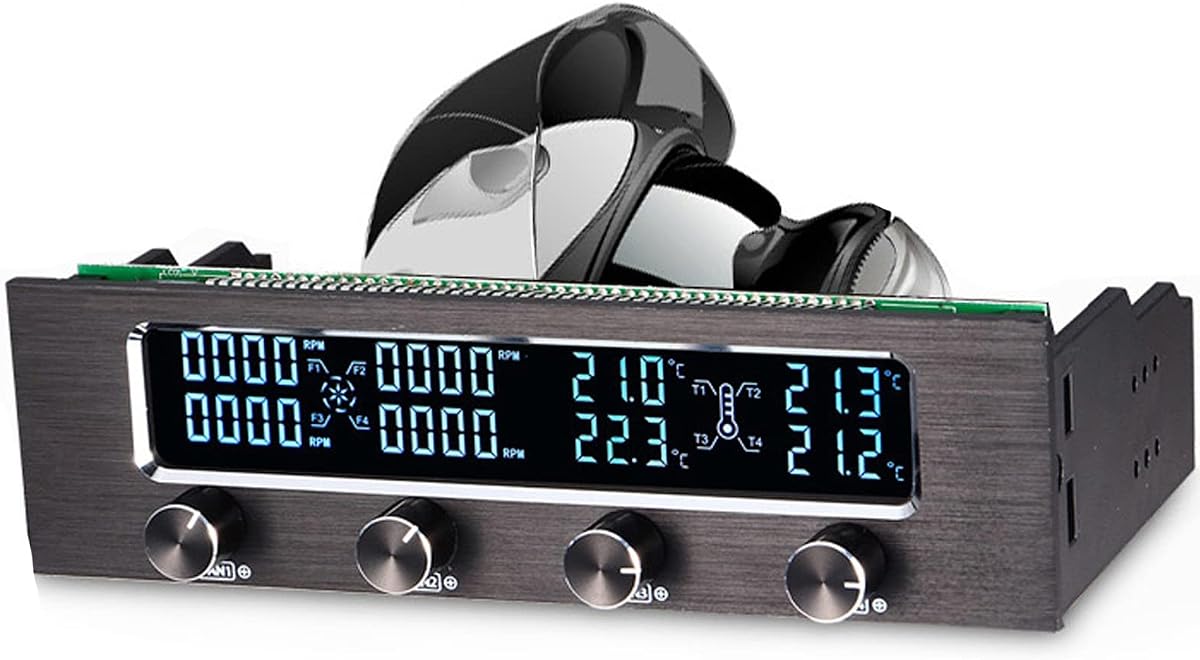
The STW 6041 is a standout unit in this category. It features a large LCD screen that displays fan speeds and temperatures simultaneously. This model has a perfect rating and offers robust safety features like high temperature alarms. It is built for durability with high-spec capacitors.
We may earn a commission when you buy through this link, at no additional cost to you.
Its LCD screen is a major benefit. You can see four sets of fan speeds and temperatures at a glance. The panel is made of aluminum alloy with multiple matt treatments. This ensures it looks good in any chassis and resists scratches. The PWM circuit helps reduce high frequency noise during operation.
There are some trade-offs to consider. The unit requires a 5.25 inch drive bay for installation. This might be a limitation for smaller cases that lack this specific slot. Additionally, it only offers four channels of control, which might not be enough for complex cooling setups.
This controller is ideal for users who want a clear visual overview of their system status. If you need a reliable way to monitor temperatures and fan speeds without software, this is a strong candidate. The build quality justifies its position as a top pick.
Overall, the STW 6041 balances features and build quality effectively. It provides the necessary tools to keep a PC cool and quiet. The safety systems give peace of mind against overheating. It remains a highly recommended option for standard desktop builds.
The wide LCD screen ensures you can monitor multiple data points at once without needing external software.
High-specification capacitors and aluminum panels extend the lifespan of the unit significantly under normal usage conditions.
We may earn a commission when you buy through this link, at no additional cost to you.
The V BESTLIFE controller offers practical functionality for system monitoring. It allows you to control up to five fans through a single front panel unit. The big LCD screen provides constant access to temperature and hard disk states. This makes it easy to spot issues before they become critical.
We may earn a commission when you buy through this link, at no additional cost to you.
One of its main strengths is flexibility. You can switch between automatic and manual modes easily. The alarm temperature range can be set manually from 40 to 90 degrees. This customization helps tailor cooling to your specific hardware needs. It alerts you immediately if a fan breaks down.
However, the unit lacks advanced software integration. It operates independently, which is good for simplicity but limits remote monitoring. The design is also somewhat basic compared to premium RGB options. You should expect a functional but not flashy appearance in your build.
This model is suitable for users who prioritize function over form. It provides essential control and monitoring features without unnecessary complexity. The ability to track hard disk state is a nice bonus. It serves well for standard office or home PC setups.
In conclusion, the V BESTLIFE model delivers reliable cooling management. It keeps you informed about your system health through clear displays. The manual settings allow for precise control. It is a solid choice for those needing a straightforward solution.
The display includes hard disk state information, offering a more comprehensive view of your system's health.
Setting your own alarm thresholds ensures alerts are triggered exactly when you need them.
We may earn a commission when you buy through this link, at no additional cost to you.
The SaiDian controller is an affordable option for basic fan management. It features a large screen that displays temperature, fan speed, and even date time. This extra feature can be useful for systems without a real-time clock. It controls three groups of fans with a simple interface.
We may earn a commission when you buy through this link, at no additional cost to you.
Safety is addressed with a fan jam alarm. If a fan fails to dissipate heat, an alarm sounds immediately. You can manually set the alarm temperature range to prevent hardware damage. The manual speed adjustment allows for precise control when needed. It is designed for installation in the optical drive bay.
The build quality is standard for this price point. The panel material is functional but not as premium as aluminum alloy units. The rating is lower than competitors, which might indicate mixed user experiences. However, for budget builds, it provides essential cooling control.
This unit is best for users who want basic monitoring without extra costs. The inclusion of date and time is a unique touch for a controller. It offers enough flexibility for small to medium setups. Just be aware of the limitations in material quality.
Overall, the SaiDian controller serves well as an entry-level device. It keeps fans running and alarms active when temperatures get too high. The display is informative enough for general use. It is a reasonable choice for cost-conscious builders.
Showing the date and time on the front panel adds a practical utility not found on many standard controllers.
The pricing reflects a focus on essential functions rather than premium materials or complex aesthetics.
We may earn a commission when you buy through this link, at no additional cost to you.
The Thermaltake Commander F6 brings high-end features to the front panel market. It supports six channels of voltage control, allowing extensive fan management. The RGB LCD screen adds a customizable aesthetic element to your build. This model is designed for users who want both performance and style.
We may earn a commission when you buy through this link, at no additional cost to you.
It includes six temperature sensors, providing detailed thermal feedback across different areas. The LCD screen offers visual customization through RGB lighting. Compatibility with Lumi LED strips enhances the lighting ecosystem. It also includes short circuit protection for added safety. The knobs provide direct voltage control for precise fan speeds.
While feature-rich, this unit comes with a higher price tag. The complexity of setup might be daunting for beginners. You need to ensure you have enough drive bay space for the unit. The reliance on voltage control instead of PWM might limit speed range slightly compared to PWM hubs.
This controller is perfect for enthusiasts who want a complete visual and thermal solution. It fits well into RGB-heavy builds where aesthetics matter. The extensive sensor count helps optimize airflow effectively. It is a significant investment for those building a high-end system.
In summary, the Commander F6 offers top-tier functionality and looks. The combination of RGB and thermal monitoring is unique. It delivers precise control over multiple fans. If you value aesthetics alongside performance, this is a strong premium choice.
The RGB LCD screen allows you to match the controller with the rest of your system's lighting scheme.
Having six temperature sensors enables you to monitor heat sources independently for better cooling strategies.
We may earn a commission when you buy through this link, at no additional cost to you.
The Ejoyous controller offers a balanced set of features for standard cooling needs. It has four channels for independent control of case fans. The wide LCD display shows RPM and temperature values conveniently. It uses aluminum alloy for a robust execution and matte finishes.
We may earn a commission when you buy through this link, at no additional cost to you.
Automatic temperature control is a key strength here. Four sensors monitor different areas inside the case for demand-oriented cooling. The double safety function detects fan standstills and alerts you acoustically. This improves reliability by ensuring fans do not stop unexpectedly. The PWM circuitry reduces high-frequency noises during operation.
One limitation is the lack of deep software integration. It functions well as a standalone hardware controller. The brand is less known than competitors like Thermaltake. However, the build materials are solid for the price. The manual adjustments are quick to access.
This unit suits users who want reliable automation without extra cost. The aluminum panel ensures durability. It keeps the system quiet with its PWM design. If you need a standard four-channel solution, this model works well.
Overall, the Ejoyous controller provides dependable thermal management. It balances automatic and manual modes effectively. The safety features are well-implemented for the category. It is a good option for those seeking functionality over brand prestige.
Each of the four channels can be controlled separately, giving you tailored cooling for different components.
Detecting fan standstills ensures that your system is not left without cooling if a fan fails.
We may earn a commission when you buy through this link, at no additional cost to you.
The ARCTIC fan controller is an internal hub designed for complex setups. It offers 10 ports with individual PWM control. This allows precise management of a multi-fan setup without relying solely on motherboard headers. It supports both Windows and Linux systems natively.
We may earn a commission when you buy through this link, at no additional cost to you.
One major benefit is the current output. It supplies up to 2 A per port, totaling 4.5 A. This is higher than what some motherboards provide. You can control every fan independently to optimize airflow. The magnetic or adhesive mounting makes installation flexible within the case.
Because it is an internal hub, it lacks a front panel display. You rely on software for monitoring. This requires installing drivers on Windows or Linux. It might be less convenient for users who want hardware readouts. It is best suited for those comfortable with software control.
This unit is ideal for builds with many fans that need independent control. It reduces cable chaos through centralized management. The higher current per port ensures fans get enough power. It is a strong choice for server or workstation cases.
In summary, the ARCTIC controller excels at internal management. It prioritizes performance and software compatibility over front displays. If you have a high fan count, this hub provides the necessary channels. It streamlines cables and improves airflow control.
The ability to deliver 2 A per port ensures that even high-performance fans receive adequate power.
Native support for both Windows and Linux allows for flexible monitoring and control across different systems.
We may earn a commission when you buy through this link, at no additional cost to you.
The Noctua NA-FC1 is a compact controller designed for high flexibility. It works as a manual speed reducer or with automatic motherboard control. It is particularly useful for reducing noise on high-speed PWM fans. The unit is small and fits easily into tight spaces.
We may earn a commission when you buy through this link, at no additional cost to you.
One standout feature is the 'No stop' mode. It prevents the fan from falling below 300 RPM to avoid BIOS fan errors. This ensures the system remains stable. The included 3-way splitter cable lets you control three fans simultaneously. The build quality is supported by a six-year manufacturer warranty.
This controller is limited to a single knob and does not have a display. It relies on manual adjustment or BIOS settings. It is not for users who want to monitor temperatures directly. It is focused purely on speed reduction and stability.
It is best for users looking to reduce noise from powerful fans. If you need to lower fan speed without losing stability, this is a good tool. The small size means it can be hidden behind panels. It is a reliable solution for specific noise issues.
Overall, the NA-FC1 offers specialized control for high-speed fans. It provides peace of mind with its 'No stop' feature. The warranty is extensive compared to other units. It remains a favorite for Noctua fans and quiet builds.
Using this unit allows you to fine-tune fan speeds to minimize noise while maintaining adequate cooling.
The 'No stop' mode ensures that your fans never drop to zero RPM, avoiding system boot issues.
We may earn a commission when you buy through this link, at no additional cost to you.
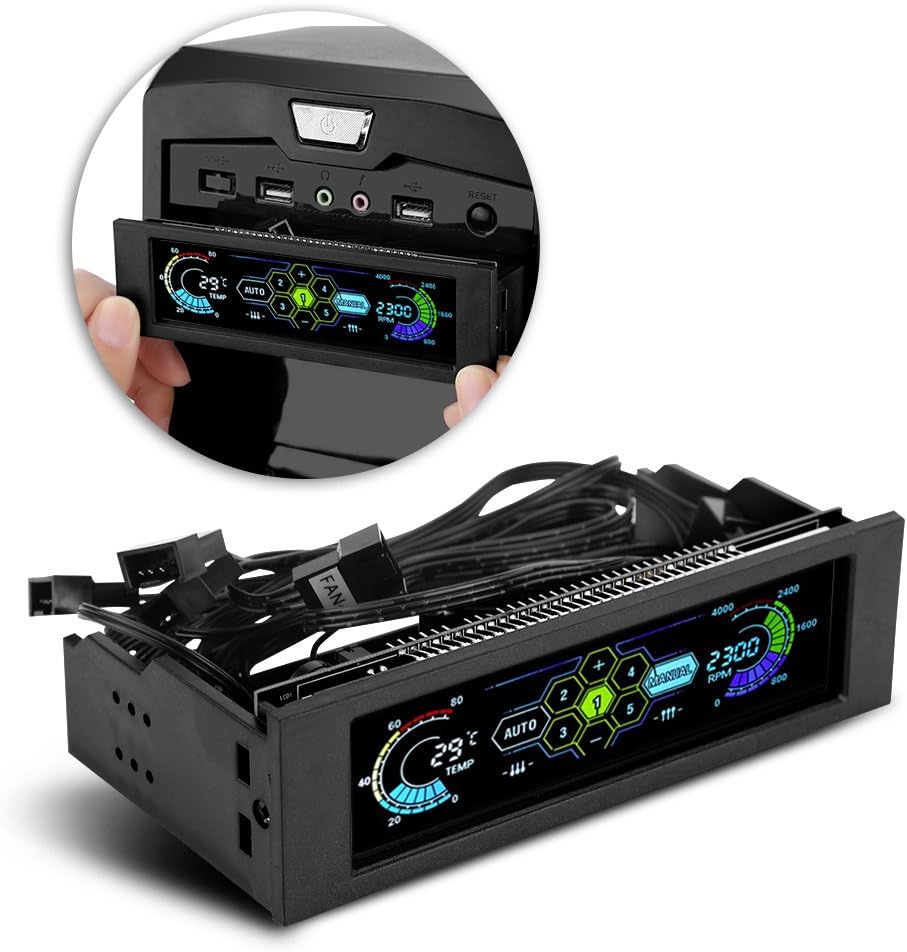
The Delinx controller is a versatile DIY kit for thermal regulation. It includes a temperature probe and adapter cable for easy installation. It supports both automatic and manual modes. The digital display switches between temperature and fan speed readings. It offers wide voltage compatibility from 5V to 30V.
We may earn a commission when you buy through this link, at no additional cost to you.
It provides 60W of power and up to 5A output. This supports a wide range of 4-pin PWM fans. Built-in over-voltage and reverse polarity protection ensure safe use. It has power-off memory for all settings, so you do not lose preferences. The compact size allows integration into many projects.
This unit does not fit standard 5.25 inch drive bays. It requires a bit of custom mounting or adhesive placement. It is designed for flexibility in various applications like server cabinets or aquariums. It is not strictly a PC case front panel unit.
This model is great for users who need a compact and flexible controller. The dual modes make it adaptable. The display is clear and informative. If you want a simple manual or auto controller, this delivers excellent value.
Overall, the Delinx controller is a reliable budget option. It balances features and protection well. The DIY kit approach makes it accessible. It is a top choice for those looking for a compact and affordable solution.
The power-off memory feature ensures your settings remain intact even after the system is completely powered down.
Its wide voltage support and compact size make it suitable for projects beyond standard PC cooling.
We may earn a commission when you buy through this link, at no additional cost to you.
This 4 Fans Controller shares many features with the STW 6041 model. It has a wide LCD screen displaying fan speeds and temperatures. It uses an alloy panel with multiple matt treatments for durability. It includes a safety system with high temperature alarm and fan anti-seize.
We may earn a commission when you buy through this link, at no additional cost to you.
It controls four channels of fans effectively. The PWM circuit adjusts speed to reduce noise. It features date and time on the display for convenience. The high-spec capacitors are designed for longer service life. This ensures the unit remains reliable over time.
However, the rating is lower than the similar STW model. This suggests potential issues with quality control or user support. It is essentially a rebranded or alternate version of a similar design. If you have a choice between the two, check the current reviews carefully.
This model is a viable option if the primary STW unit is out of stock. It offers the same core functionality. The safety features are present. It is a standard choice for 5.25 inch bay installations.
In summary, this unit provides standard 4-channel control and monitoring. It is a reasonable alternative but check ratings before buying. It maintains the essential features needed for basic thermal management. It is best for users who need a replacement part.
The anti-seize alarm helps prevent fans from getting stuck, which could lead to overheating issues.
By using a PWM circuit, the controller helps reduce high-frequency noise during operation.
We may earn a commission when you buy through this link, at no additional cost to you.
The 5-Fans Speed Controller is designed for users needing more channels. It controls up to five groups of fans through a single panel. The big LCD screen displays temperature and hard disk state. It also includes date and time for extra utility.
We may earn a commission when you buy through this link, at no additional cost to you.
You can manually set the alarm temperature range from 40 to 90 degrees. This provides flexibility in thermal management. The unit alerts you immediately if a fan breaks down and cannot cool the computer. It offers a clear view of working conditions constantly.
The rating is lower than many top picks. This may indicate issues with consistency or support. It is a functional unit but might lack the refined build of premium models. It is best suited for budget builds that need extra channels.
This controller is a good option for those needing five control points. It provides essential monitoring and alarm features. The display is informative enough for general use. If you need more channels without spending much, this is a candidate.
Overall, the 5-Fans controller serves its purpose well. It offers necessary controls for multiple fans. The additional monitoring features add value. Just check reviews to ensure it meets your specific needs.
With five groups of fans, this unit offers more control points than standard four-channel models.
The manual alarm range allows you to set specific thresholds for your hardware.
We may earn a commission when you buy through this link, at no additional cost to you.
Choosing a Front Panel Fan Controller requires considering several factors. We have identified the most important aspects to help you make the right decision for your system.
The number of channels determines how many fans you can control. Standard models offer three to five channels, while premium ones may offer more. Ensure the unit supports the number of fans in your setup.
Choose a model that matches your current and future fan needs.
Some controllers feature LCD screens that display temperature and fan speeds. Others are basic knobs without visual feedback. If you want to monitor temperatures at a glance, opt for an LCD display.
LCD screens provide better visibility and more data.
Controllers often have automatic and manual modes. Automatic mode adjusts fan speed based on temperature readings. Manual mode gives you direct control over speeds. Look for units that offer both for flexibility.
A mix of modes ensures both convenience and precision.
Safety features like high temperature alarms and fan break alerts are vital. These systems warn you if the temperature gets too high or a fan stops. They protect your hardware from damage due to overheating.
Always prioritize units with reliable alarm systems.
Check the voltage support of the controller. Some units support 5V and 12V, while others cover a wider range. This ensures compatibility with different fan types and setups.
Verify that the voltage range matches your fan requirements.
The material of the front panel affects durability and aesthetics. Aluminum alloy panels are more durable and premium than plastic. They also resist scratches better over time.
Aluminum panels offer a higher quality finish.
Most controllers are designed for 5.25 inch optical drive bays. Ensure your case has an available slot before buying. Some units may require additional adapters or mounting hardware.
Confirm that your case has the necessary drive bay space.
PWM controllers allow for more precise fan speed control than voltage-based ones. PWM fans can adjust speeds more smoothly. If you have high-speed PWM fans, ensure the unit supports this standard.
PWM support provides better noise and speed control.
Start by connecting the controller to your power supply and fans. Most units require a Molex or SATA power connection. Ensure the fans are connected to the designated channels to avoid short circuits.
Calibrate the controller by setting the alarm temperature. Adjust the manual mode to find the optimal speed for your system. Use the display to monitor temperatures under load.
Clean the unit regularly to prevent dust buildup. Dust can block the display or vents. Ensure that the panel remains clean for clear visibility of readings.
Most Front Panel Fan Controllers are designed to fit into a 5.25 inch drive bay. You should check your case specifications to ensure you have an available slot. Some units might require adapters if your case does not have this space.
PWM control adjusts fan speed by changing the signal pulse, while voltage control changes the power voltage. PWM is generally more precise and efficient for modern fans. Ensure your controller matches your fan type.
Access the controller menu to set the alarm threshold. You can usually set a specific temperature value. When this value is reached, an alarm sound will activate to warn you of high heat.
Some controllers support both 3-pin and 4-pin fans. Check the specifications to ensure the connector matches. If it only supports 4-pin, you may need an adapter for 3-pin fans.
This often means the controller is in manual mode or set to full speed. Check the settings to ensure automatic mode is enabled. Also, verify that the temperature probes are connected properly.
Yes, controllers are designed to handle fan power safely. Ensure the total current draw does not exceed the controller's maximum rating. This prevents overheating or damage to the unit.
We have explored ten excellent Front Panel Fan Controllers for November 2026. Each model offers unique features such as LCD displays, multiple channels, and safety alarms. The STW 6041 stands out as an all-around pick for most users.
When making your decision, prioritize the number of channels and display clarity. Ensure the unit supports the fan types you have. A good controller provides peace of mind through reliable thermal monitoring.
Please remember to check current prices and stock before purchasing. Availability can change over time. We hope this guide helps you choose the right controller for your PC build.