
ESP32-S3-Nano Microcontroller
5.0Editor score
Affordable development platform
8MB PSRAM for complex tasks
Seamless Arduino and MicroPython switching
This guide compares the top Arduino Nano ESP32 boards and alternatives for Wi-Fi, Bluetooth, and embedded IoT projects with detailed specs and expert insights.
The Arduino Nano ESP32 represents a significant leap in compact microcontroller design, combining powerful processing with wireless connectivity. This generation of boards offers developers robust tools for building smart devices without sacrificing size or performance.
We evaluated ten top-rated development boards based on processor speed, connectivity options, and ease of use. Our analysis covers official Arduino products alongside high-performance third-party alternatives that offer unique features for specific application needs.
Each selection highlights key strengths like USB-C support, MicroPython compatibility, and advanced sensors. Please note that product availability and pricing may change over time, so verify current details before making your final purchase decision.
5.0Editor score

4.6Editor score

4.8Editor score
This comparison table provides a side-by-side look at the key specifications and capabilities of each board to help you choose the right fit for your next project.


The Arduino Nano ESP32 stands out as the top choice for developers needing high performance in a small form factor. With a rating of 4.6 stars, it offers a balanced mix of power and ease of use.
We may earn a commission when you buy through this link, at no additional cost to you.
Powered by the ESP32-S3 chip, this board runs at up to 240 MHz with a dual-core architecture. It features robust Wi-Fi and Bluetooth 5.0 connectivity, making it ideal for complex wireless projects and edge computing tasks.
While it is more expensive than some alternatives, the inclusion of USB-C and MicroPython compatibility justifies the cost. The HID support also allows for unique input device projects that other boards cannot easily replicate.
Buy this board if you want the latest technology from Arduino with strong community support. It is perfect for students, professionals, and hobbyists who need reliable and fast wireless connectivity.
The dual-core Xtensa processor handles real-time data processing and machine learning tasks efficiently without lagging.
Built-in Wi-Fi and Bluetooth allow seamless integration with mobile apps and cloud platforms for smart home control.
We may earn a commission when you buy through this link, at no additional cost to you.
This microcontroller development board offers exceptional value for makers on a tight budget. With a perfect 5.0 rating, users praise its reliability and performance in standard IoT applications.
We may earn a commission when you buy through this link, at no additional cost to you.
The onboard ESP32-S3R8 chip comes with 8MB PSRAM and 16MB Flash, which is rare for this price point. It supports Arduino IoT Cloud and MicroPython, making it accessible for beginners and pros alike.
The only trade-off is that it lacks the official brand name, which might mean fewer tutorials specifically for this exact model. However, the compatibility with standard ESP32 libraries mitigates this issue effectively.
It is the best choice for projects where cost is a primary concern but performance cannot be sacrificed. Ideal for prototyping multiple units or large scale deployments.
The generous 8MB PSRAM allows you to handle larger data buffers and complex applications without running out of memory.
Built-in support for Arduino IoT Cloud simplifies remote monitoring and control without additional coding complexity.
We may earn a commission when you buy through this link, at no additional cost to you.
The ESP32-P4-NANO is a powerhouse for developers looking to push the limits of embedded systems. It stands out with its RISC-V processor and advanced security features tailored for enterprise use.
We may earn a commission when you buy through this link, at no additional cost to you.
It includes specialized hardware for image and voice processing, which is ideal for smart displays or voice assistants. The secure boot and encryption features ensure your data remains safe from unauthorized access.
Developers might find the RISC-V architecture slightly different from standard ARM chips, requiring some learning time. However, the performance benefits and unique interfaces make it worth the investment.
Choose this board for high-end projects requiring security and complex processing capabilities. It is perfect for industrial applications or commercial products.
Hardware accelerators for JPEG and H264 encoding allow real-time video processing without taxing the main CPU.
Built-in cryptographic accelerators and secure boot protect sensitive data in professional IoT environments.
We may earn a commission when you buy through this link, at no additional cost to you.
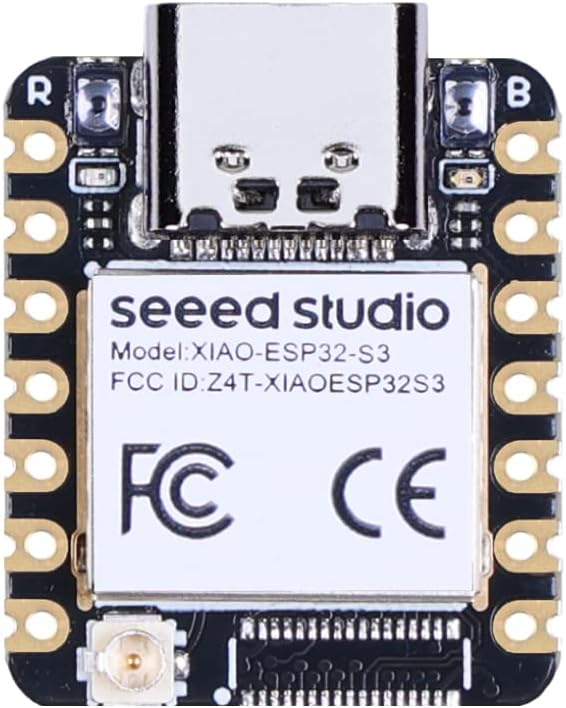
This tiny board is perfect for wearable devices where size is critical. Its 4.7 rating reflects its ability to deliver powerful performance in a thumb-sized package.
We may earn a commission when you buy through this link, at no additional cost to you.
The lithium battery charge management capability is a standout feature for portable projects. It consumes as little as 14 microamps in deep sleep, extending battery life significantly.
Because it is so small, physical prototyping can be trickier than standard boards. You might need custom PCBs or careful soldering to connect it effectively.
Buy this if you are making a wearable or portable project. It balances size and power better than almost any other option on the market.
Multiple power consumption models ensure your project runs longer on a small battery.
The 21×17.5mm design allows fitting into small enclosures like rings or watches easily.
We may earn a commission when you buy through this link, at no additional cost to you.
This pack offers three mini development boards, making it a great deal for bulk projects. The 4.4 rating suggests consistent performance across units for various tasks.
We may earn a commission when you buy through this link, at no additional cost to you.
The independent power supply setting allows you to optimize energy use for each module separately. The castellated module design lets you solder it directly onto a carrier board for permanent installations.
Note that these boards might need an external USB-to-Serial adapter for programming, which adds a step to your workflow. However, the savings on hardware costs often make up for this.
Ideal for projects needing multiple nodes or prototypes. It is a smart choice for industrial sensors or large distributed systems.
Castellated holes simplify integration into larger PCBs without extra connectors.
Independent supply settings let you tailor power for different environments efficiently.
We may earn a commission when you buy through this link, at no additional cost to you.
This kit is designed for those just starting out with electronics. It provides everything needed to learn the fundamentals without hunting for individual parts.
We may earn a commission when you buy through this link, at no additional cost to you.
The step-by-step tutorials guide you through 30+ projects, helping you understand sensors and motors quickly. It is fully compatible with the Arduino IDE for easy programming.
While it is more expensive than a bare board, the educational value is worth it. The only downside is the bulk of the packaging and components if you only want a single unit.
Buy this if you are a student or a hobbyist. It removes the learning curve barrier effectively and gets you building immediately.
Access to detailed circuit diagrams and code examples accelerates your learning process significantly.
Over 35 modules ensure you can start diverse projects right out of the box.
We may earn a commission when you buy through this link, at no additional cost to you.
The Arduino Nano 33 IoT is a reliable classic for secure cloud connectivity. Its 4.5 rating reflects its stability in industrial and smart home deployments.
We may earn a commission when you buy through this link, at no additional cost to you.
It features a Secure Element that ensures your data stays encrypted. This hardware-level security is rare in boards at this price point.
While it is not as powerful as newer ESP32 chips, it is sufficient for many applications. The only trade-off is slower processing speed for complex computations.
Choose this for projects where security is paramount. It is perfect for simple sensors or devices that need safe cloud communication.
Built-in secure element provides robust encryption for all your data transfers.
Direct integration with IoT cloud platforms simplifies remote management tasks.
We may earn a commission when you buy through this link, at no additional cost to you.
This three-pack offers great value for simple wireless projects. It is a proven board that has been used in thousands of hobby projects for years.
We may earn a commission when you buy through this link, at no additional cost to you.
It supports both AP and STA modes, making it flexible for different network setups. The low power consumption is ideal for battery-powered sensors.
While it is an older model with less features than the S3 versions, it is still very capable. The lack of USB-C might require an adapter.
Buy this for basic tasks like weather stations or remote controls. It is reliable and affordable enough for mass production.
Supports AP, STA, and combined modes for versatile networking configurations.
Optimized for low power usage to extend battery life in remote sensors.
We may earn a commission when you buy through this link, at no additional cost to you.
This three-pack provides a modern twist on the classic ESP32 with USB-C support. The 4.7 rating indicates high user satisfaction with its build quality.
We may earn a commission when you buy through this link, at no additional cost to you.
OTA update support allows you to update firmware wirelessly, which is great for deployed devices. It also supports dynamic clock scaling to save power.
The only minor limitation is that Bluetooth is version 4.2 instead of the newer 5.0. However, for most use cases, this difference is negligible.
Choose this if you want a cost-effective way to buy multiple boards with USB-C. It is perfect for classrooms or teams.
Over-the-air updates mean you can fix bugs remotely without physical access.
USB-C port simplifies connections and offers faster data transfer rates.
We may earn a commission when you buy through this link, at no additional cost to you.
This board combines two powerful microcontrollers for maximum flexibility. Its 4.7 rating shows it is a top choice for advanced developers needing diverse connectivity.
We may earn a commission when you buy through this link, at no additional cost to you.
The built-in LED matrix provides immediate visual feedback without extra components. It also includes a CAN bus for automotive or industrial applications.
While it is larger than a Nano, it brings features that others lack. The price is higher, but the extra hardware justifies it for complex tasks.
Buy this for advanced projects needing analog or industrial control. It is the most versatile option in this list.
The integrated 12×8 LED matrix displays data and status without extra wiring.
CAN bus and high-precision DAC support professional-grade applications and automation.
We may earn a commission when you buy through this link, at no additional cost to you.
Selecting the right development board requires balancing performance, features, and budget. Here are the key factors to consider before making your purchase.
The speed and architecture of the processor determine how fast your board can handle tasks. Dual-core chips like the ESP32-S3 offer better multitasking than single-core options.
Look for boards with at least a dual-core CPU if you plan to run complex logic alongside network tasks.
Check whether the board supports the latest Wi-Fi and Bluetooth standards. Newer versions like Wi-Fi 5 and Bluetooth 5.0 offer better range and speed.
Ensure the board supports the protocols your project requires for seamless communication.
Memory is crucial for storing code and handling data buffers. Look for boards with ample PSRAM to support richer applications.
Choose higher memory if you plan to process images or large datasets locally.
If your project is battery-powered, low power consumption is essential. Boards with deep sleep modes can run for weeks on a single charge.
Select a board with energy-saving features if longevity is a priority for your device.
A board that supports MicroPython is easier to learn and code quickly. Ensure it is compatible with the Arduino IDE for standard projects.
Choose a board that matches your preferred coding language and tools.
Smaller boards like the XIAO are great for wearables but harder to wire. Standard Nano size is easier to use on breadboards.
Pick a form factor that fits your final product enclosure comfortably.
Official boards often have better documentation and community resources. Third-party options may save money but lack tutorials.
Consider the availability of examples and guides before buying obscure models.
Features like built-in LEDs, DACs, or CAN bus can save extra components. Specialized chips like the P4 offer image processing capabilities.
Evaluate if unique hardware features add value to your specific use case.
To get started, install the latest Arduino IDE and add the necessary ESP32 board manager URLs. This ensures your computer recognizes the new processor and allows for easy code uploads.
Connect the board to your computer using a high-quality USB-C cable. Ensure the connection is stable to prevent interruption during firmware flashing or debugging processes.
Avoid exposing the board to moisture or extreme heat. Store your projects in a dry place and use protective cases to keep the ports and pins safe from physical damage.
Not all shields are compatible due to pin changes and different power requirements. You may need to check pinouts and voltage levels before connecting legacy hardware to this board.
Yes, the board is fully compatible with MicroPython for rapid development. This allows you to write code in Python instead of C++ for faster prototyping and learning.
You can update firmware via the Arduino IDE using a USB connection or Over-the-Air (OTA) if supported. Make sure you have the latest drivers installed to avoid errors.
The ESP32-S3 offers faster processing speeds, more RAM, and better AI acceleration than the original ESP32. It also supports USB Native and improved connectivity features.
Most boards come with pre-soldered headers so you can use them on breadboards immediately. Soldering is only required for specific modules or permanent custom carrier boards.
Use deep sleep modes and reduce the clock speed when not in use. Adding an external battery management system can also optimize power consumption significantly.
We explored ten top contenders ranging from the official Arduino Nano ESP32 to versatile third-party alternatives. Each board offers distinct advantages depending on your needs for speed or cost.
If you need high performance, prioritize boards with more RAM and newer connectivity standards. For simple tasks, budget-friendly packs provide excellent value without sacrificing core features.
Prices and availability change frequently so check current listings before buying. We hope this guide helps you build a better and more reliable smart device for the future.