
Handheld Fish Finder Portable
4.2Editor score
Portable and lightweight design
200 kHz sonar frequency
Works in fresh and salt water
Finding a reliable cheap depth finder does not have to break the bank. Anglers and boaters need accurate water readings to locate fish and avoid hazards without overspending on expensive electronics. This guide highlights affordable models that deliver consistent performance.
We compared ten top rated units based on user feedback, sonar technology, display quality, and ease of installation. Our selection includes handheld portables, transom mounted units, and dash mounted sounders suitable for various vessel types and fishing styles.
Each pick shows key specifications, pros, cons, and real world performance notes to help you decide. Prices and availability change frequently so always check the current listings before purchasing to ensure you get the best deal available today.
4.2Editor score
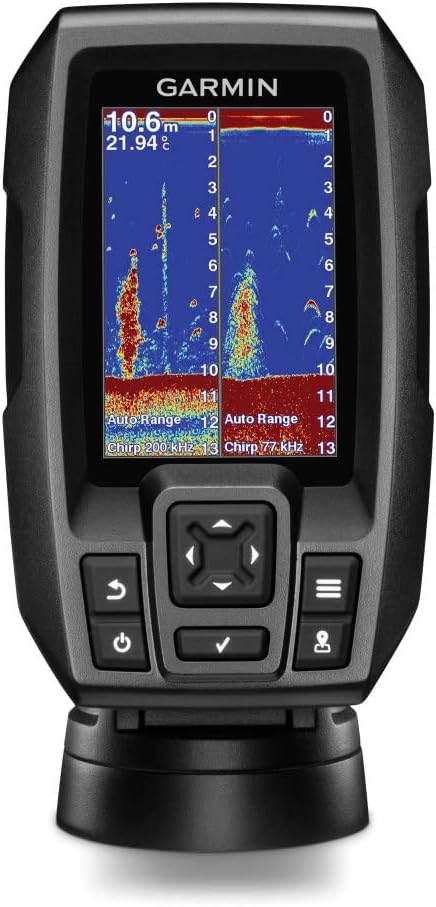
4.6Editor score

4.5Editor score
As an Amazon Associate we earn from qualifying purchases.
This side by side comparison reviews all ten selected models to highlight their unique strengths and weaknesses for budget conscious buyers seeking reliable underwater data.


The Garmin Striker 4 stands out as a top choice for anglers seeking reliable sonar without overspending. It earns high praise for its Clear Vu scanning sonar which provides near photographic images of the underwater environment. Users appreciate the simple interface and the included transducer.
We may earn a commission when you buy through this link, at no additional cost to you.
Its Clear Vu sonar gives detailed representations of objects and fish which helps identify structure quickly. The Chirp sonar sends continuous frequencies for better target separation and crisper arches. Waypoint maps allow you to mark brush piles or docks easily for future visits.
While the GPS is basic and the screen is smaller than premium models it remains robust enough for most freshwater or saltwater trips. The IPX7 rating ensures it handles splashes and rain without issue. Installation is straightforward with dedicated buttons.
This unit is ideal for boaters or kayakers who need accurate depth and fish data without complex features. Its durability and ease of use make it a trusted companion on the water. We recommend it for those wanting solid performance at a reasonable price point.
Clear Vu sonar produces near photographic images allowing you to see structure and fish with high detail compared to traditional sonar.
The keyed interface with dedicated buttons makes operation intuitive even in bright sunlight or while moving on a boat.
We may earn a commission when you buy through this link, at no additional cost to you.
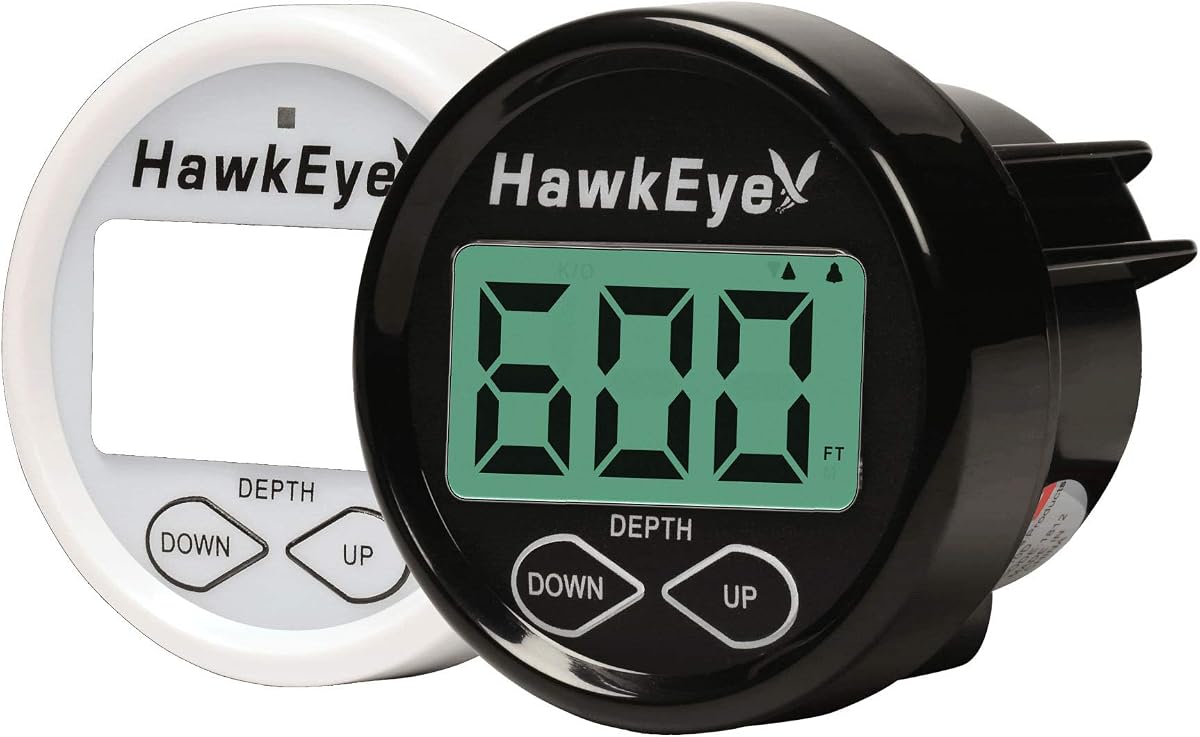
The DepthTrax 2B is designed for boat owners who want a permanent dashboard depth sounder. It delivers uninterrupted readings up to 600 feet even at high speeds. The polarized LCD ensures clear viewing with or without sunglasses.
We may earn a commission when you buy through this link, at no additional cost to you.
Its 3-stage warning system signals alarms with sound and lights if shallow water is detected. The transducer shoots through fiberglass or thin aluminum hulls easily. This model focuses on essential depth data rather than fish finding icons.
Installation involves drilling a hole which may not suit all vessels. The glue-in option works for specific hull types only. Despite limited functionality the precision is high and false readings are rare due to algorithmic programming.
Ideal for power boaters needing constant depth monitoring while cruising at speed. It prioritizes safety and accuracy over advanced fish mapping. Check hull compatibility before buying to ensure a smooth setup process.
This unit maintains stable depth readings even when your boat travels up to 60 mph which is rare for budget depth finders.
The 3-stage alarm system uses sound and lights to alert you instantly if you are approaching dangerously shallow water.
We may earn a commission when you buy through this link, at no additional cost to you.
The Hawkeye DT1H offers a straightforward way to check depth and water temperature on the go. It is perfect for shore fishing or small boats where mounting a larger unit is impractical. The handheld design keeps things simple and accessible.
We may earn a commission when you buy through this link, at no additional cost to you.
Users can see exact water temperature which is vital for targeting specific species. The depth range extends to 300 feet covering most common fishing spots. It requires minimal setup and runs on standard batteries for convenience.
The screen size is small and lacks advanced graphics compared to modern fish finders. However for quick depth checks it performs reliably without confusion. The price point makes it an attractive entry level option.
This device suits anglers who prioritize portability and basic data over detailed mapping. It is excellent for casual trips or as a backup unit. Ensure you understand its limitations before relying on it solely for deep water exploration.
Displaying water temperature directly helps anglers identify thermoclines where fish are likely to hold during different seasons.
The compact handheld form factor fits easily in a tackle box or pocket so you can carry it anywhere.
We may earn a commission when you buy through this link, at no additional cost to you.
This portable fish finder delivers essential sonar data at a very low price point. It is designed for kayak anglers or those fishing from docks. The unit shows water depth and approximate fish location clearly on its LCD screen.
We may earn a commission when you buy through this link, at no additional cost to you.
It uses 200 kHz sonar to detect bottom structure and fish schools. The included transducer can be tossed into water easily. A neck strap allows hands free use while handling rods or gear.
Battery life lasts about 4 to 5 hours on new AAA cells which is enough for most trips. The backlight helps visibility in low light conditions. However it lacks advanced mapping or GPS capabilities.
For tight budgets this is an excellent starting point to understand sonar basics. It is durable enough for casual use and easy to store. If you need more features later you can upgrade but this serves well for beginners.
The included neck strap lets you wear the display around your neck so you can focus on casting without holding it.
Priced significantly lower than branded units it provides basic sonar functionality without straining your wallet.
We may earn a commission when you buy through this link, at no additional cost to you.
The LUCKY FFC1108 is built specifically for portable fishing scenarios like kayaks or shore casting. It displays both water depth and fish locations with helpful alarms. You can attach the transducer to your kayak hull or cast it out.
We may earn a commission when you buy through this link, at no additional cost to you.
Its display shows weeds and rocks on the bottom which helps avoid snags. The ability to switch between feet and meters adds versatility for international users. A backlight ensures you can read data at night.
Battery life is decent but could be longer for all day trips. The sensitivity levels allow adjustment for clear or murky water. While basic it covers the essentials needed for locating fish accurately.
This model is ideal for anglers who move locations frequently and need a compact solution. It offers good value for money with solid build quality. Keep spare batteries on hand for longer excursions.
The transducer can be tied to your line and cast like a bobber so you can find fish in hard to reach spots.
Five sensitivity levels help you tune the sonar to filter out noise or detect small fish in different water conditions.
We may earn a commission when you buy through this link, at no additional cost to you.
Humminbird is a respected name in marine electronics and the PiranhaMAX 4 continues that tradition at a budget price. It offers dual beam sonar so you can choose between detailed narrow views or wider coverage. This flexibility helps identify structure effectively.
We may earn a commission when you buy through this link, at no additional cost to you.
The tilt and swivel mount lets you adjust the screen angle easily for better viewing. It includes a transom mount transducer and comes with a limited warranty. The display is clear enough for daytime use without glare.
Like many budget units it lacks GPS or mapping features. The setup requires wiring which can be slightly complex for beginners. However the core sonar performance is reliable for finding fish and depth.
Ideal for small boats where space is limited but reliability is key. It is a great choice if you trust established brands over generic options. Ensure your boat has a transom for proper installation of the transducer.
Dual beam sonar allows switching between a narrow beam for detail and a wide beam for coverage based on your fishing needs.
The tilt and swivel mount ensures you can adjust the display angle for comfortable viewing even when seated differently.
We may earn a commission when you buy through this link, at no additional cost to you.
The Lowrance Eagle Fish Finder features a 4-inch IPS screen that stays clear in bright sunlight. It uses auto-tuning sonar to optimize settings automatically so you can focus on fishing. The included skimmer transducer provides a broad beam for kayaks.
We may earn a commission when you buy through this link, at no additional cost to you.
You can view fish icons with depth and zoom for closer looks without noise. The twist-lock connector makes attaching the display simple. This design fits well in limited spaces on small boats or kayaks.
While it lacks advanced mapping it covers the basics with high display quality. Installation is straightforward compared to other brands. It is a solid option if you prioritize screen clarity and ease of use.
This unit is perfect for small craft owners who need reliable data without spending on high end chartplotters. The auto-tuning removes guesswork for sonar settings. Check available sizes to ensure it fits your vessel layout.
The IPS portrait screen offers wide viewing angles and brightness that remain clear even in direct sunlight or through polarized glasses.
Auto-tuning automatically adjusts sonar settings to current conditions so you do not have to manually tweak sensitivity constantly.
We may earn a commission when you buy through this link, at no additional cost to you.
This handheld depth finder includes contour readout and temperature for versatile monitoring. It is water resistant and durable enough for splashing environments. A unique feature is the two-color lure fish lamp which attracts light sensitive species.
We may earn a commission when you buy through this link, at no additional cost to you.
Depth updates four times per second ensuring real time data. The rugged construction handles drops and weather well. It is suitable for various water types including lakes and rivers. You can use it for snorkeling too.
The lamp feature may not work on all fish but adds novelty. Battery operation keeps it portable and simple. While not as advanced as GPS units it provides consistent depth readings.
Ideal for anglers who want a rugged tool for multiple activities. It is compact and easy to carry anywhere. Ensure you understand the lamp function limitations before relying on it for targeting specific fish.
The built-in lamp can attract light sensitive fish adding an active element to your fishing setup without needing extra gear.
The water resistant construction allows usage in rainy or splash heavy conditions without fear of damage to the electronics.
We may earn a commission when you buy through this link, at no additional cost to you.
The LUCKY MT-202 offers wireless freedom with a massive operation distance compared to traditional wired units. It features a rechargeable battery and a castable sensor you can throw like a bobber. The 3.5 inch display shows continuous scrolling history.
We may earn a commission when you buy through this link, at no additional cost to you.
Wireless control means no drilling or brackets which is ideal for kayaks. The sensor floats and attaches to your line easily. Fish icons show exact depth numbers next to them for quick reference.
While pricier than basic models the convenience and long range justify the cost for many. Battery life is good with save mode. It works in all seasons and water types including ice.
This unit is perfect for anglers who value mobility and modern tech. It eliminates clutter on small boats. Make sure to keep it charged for optimal performance on longer fishing trips.
Wireless control lets you cast the sensor far from shore without wires tying you to the boat or kayak structure.
A rechargeable battery eliminates the need for disposable batteries reducing cost and waste over time.
We may earn a commission when you buy through this link, at no additional cost to you.
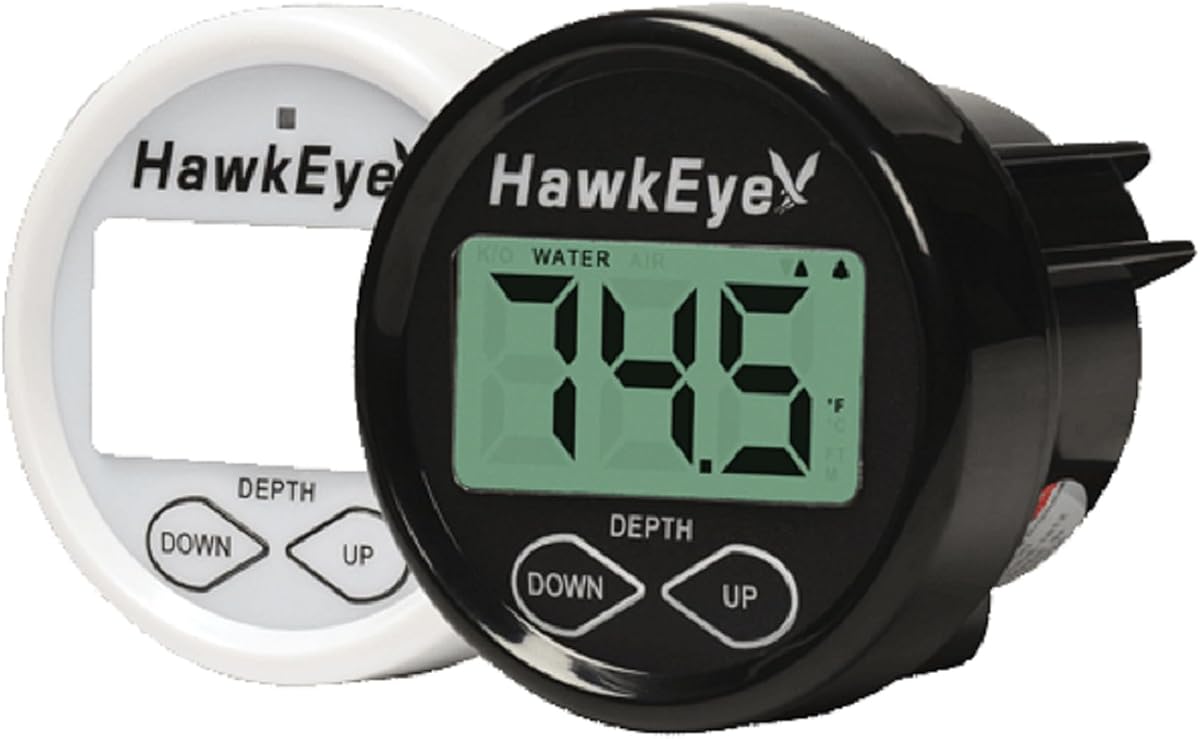
The HawkEye DT2BX-TM provides both air and water temperature readings on a soft glow backlit display. It is an in-dash unit designed for permanent installation on boats. The transom mount transducer includes 30 feet of cable for flexibility.
We may earn a commission when you buy through this link, at no additional cost to you.
The large display is easy to read with sunglasses due to polarized LCD. An advanced warning system alerts you with audible and visual alarms for shallow water. It is made using American ingenuity and technology.
Installation requires drilling a 2 inch hole for flush mounting which may be a barrier for some. The cable length helps reach the transom from the helm. It offers reliable depth data for safety.
This unit is great for boat owners needing constant monitoring of depth and temperature. The alarm system adds a layer of safety against grounding. Ensure your dash has space and you are comfortable drilling for setup.
Displaying both air and water temperature helps you monitor environmental conditions that influence fish behavior and comfort.
The 3-stage warning system ensures you hear and see alerts instantly if the boat is approaching shallow water.
We may earn a commission when you buy through this link, at no additional cost to you.
Selecting the right cheap depth finder requires understanding your specific needs and the technology available at budget price points.
Display size affects readability especially in sunlight. Look for IPS or polarized LCDs that stay clear. Larger screens are easier to read but use more space. Small displays suit portable units while large ones fit dash mounts.
Prioritize screens with backlights for night use and clear contrast for daytime visibility.
Basic sonar measures depth while advanced options like Chirp or Clear Vu provide better detail. Budget models often use standard 200 kHz sonar which is sufficient for most. Check if the unit offers dual beam or scanning features.
Choose sonar that matches your water type and need for fish identification.
Battery powered units are portable but need replacement or charging. Rechargeable models reduce waste and long term cost. Wired units connect to your boat battery which is convenient for larger vessels. Ensure the power solution fits your trips.
Match power source to how often you fish and your mobility needs.
Waterproof ratings ensure durability against splashes or rain. Look for IPX7 or similar ratings for safety. Rugged builds prevent damage from drops or rough handling. Essential for kayaks or small boats prone to waves.
Always verify the water resistance rating before use in wet conditions.
Transducers can be castable transom mount or glue-in. Transom mounts are common for boats. Castable ones are great for kayaks. Glue-in requires specific hull types. Choose based on your vessel structure and ease of setup.
Select a mounting method that suits your boat type and skill level.
Some units offer temperature, GPS, or fish alarms. Budget models focus on essentials like depth and fish icons. Consider if you need these extras or want to save money. Advanced features add cost but improve experience.
Decide which extras matter most to your fishing style and budget.
In-dash units often require drilling and wiring. Portable ones need minimal setup. If you dislike tools choose handheld options. Check manuals for requirements before buying. Proper installation ensures reliable data.
Assess your technical ability before selecting an install type.
Brands like Garmin or Lowrance have established support. Budget brands offer value but check warranty terms. Read reviews to gauge reliability. Good brands provide better service if issues arise.
Look for brands with positive user feedback and accessible support.
Start by powering on the unit and calibrating settings for your water type. Ensure the transducer is submerged fully to get accurate readings. Check battery levels or charging status before heading out to avoid interruptions.
Clean the display and transducer with fresh water after each use. Remove salt or debris that might block sensors. Store in a dry place to prevent moisture damage over time. Handle gently to protect delicate electronic components.
Update firmware if available to keep performance optimized. Follow manuals for specific maintenance tips. Regular checks ensure your depth finder works correctly when you need it most. Proper care extends lifespan and saves money on replacements.
Yes, most budget depth finders provide reliable accuracy for typical fishing depths. They use standard sonar to measure water depth clearly. While they may lack advanced mapping they deliver essential data for locating fish. Proper setup ensures consistent results on the water.
No, using a depth finder does not require a special license. These are personal electronics used for navigation and safety. Always follow local boating regulations for other gear. Depth finders themselves are free for anyone to purchase and use on public waters.
Most affordable units measure up to 300 or 600 feet depending on the model. Handhelds often reach 300 feet while mounted ones go deeper. Check specs for maximum depth before buying. This range covers the vast majority of recreational fishing spots.
Yes, many cheap depth finders work in both fresh and salt water. Just ensure the transducer is rated for corrosion if in salt. Rinse with fresh water after saltwater use to protect components. Most modern units are designed for both environments.
Handheld depth finders typically last 4 to 10 hours on fresh batteries. Rechargeable models vary based on usage intensity. Always carry spare batteries for long trips. Power saving modes help extend runtime when not actively scanning.
Yes portable units are very easy to install with no drilling needed. You can cast the transducer or attach it with a suction cup. Simply connect to a power source or batteries. This makes them ideal for kayaks or small boats.
Our top picks show that you can get reliable depth data without paying premium prices. The Garmin Striker 4 leads for overall value with GPS and clear sonar. The handheld options suit those who need portability above all.
Prioritize features like water resistance and display quality when making your choice. Think about your vessel type and typical fishing spots before buying. A good budget unit should be durable and easy to read in sunlight.
Remember that prices change often so check the latest listings before you commit. Compare current availability to get the best deal today. Happy fishing with your new tool ready to enhance your time on the water.