
Power Queen Battery Balancer 48V
4.3Editor score
Works with 24V to 48V
Low power standby at 5mA
Reverse polarity protection included
This guide compares the top 12V 24V 48V Battery Equilizer Balancer models for balancing battery banks safely and efficiently in RVs and off-grid systems.
Selecting the right battery balancer ensures your series connected banks stay healthy and perform consistently over time. Active equalizers monitor voltage differences and redistribute charge to prevent weak cells from dragging down the entire system. A reliable model protects your investment in expensive lithium or lead acid packs by extending overall cycle life significantly.
We evaluated ten leading battery equalizer products based on their voltage range, protection features, and compatibility with common battery chemistries. Each unit was assessed for its ability to handle 12V 24V and 48V configurations while maintaining safety during charge and discharge cycles. Our analysis highlights models that offer intelligent standby modes and robust reverse polarity safeguards for peace of mind.
Every pick below showcases key specifications and real world applications to help you match the device to your specific battery bank setup. Whether you power an RV solar array or a trolling motor system, these balancers simplify maintenance and improve energy reliability. Note that product details and availability may change so verify current listings before purchasing your final choice.
4.3Editor score

4.3Editor score

4.2Editor score
The following table provides a side by side overview of each battery equalizer model included in our review. You can compare their voltage capabilities, protection features, and intended use cases to find the best fit for your specific energy storage needs across different applications and battery types.




The LiTime 48V Battery Balancer stands out as a top choice for managing complex battery banks with its active equalization technology. It holds a strong rating from users who appreciate its ability to handle voltages up to 48V with ease. This device ensures that your connected batteries remain balanced even when they are subject to varied load demands over time.
We may earn a commission when you buy through this link, at no additional cost to you.
Its robust design includes four connection ports which allow for flexible integration into systems built from multiple 12V units. The active balancing function works to minimize voltage differences between cells which helps extend their overall life span significantly. You get peace of mind from built in reverse polarity and high temperature protection that guard against common installation errors or heat issues.
While the unit lacks an integrated display for visual monitoring of voltage levels users often find the automatic operation reliable enough for most setups. The high current capability ensures quick balancing but may require careful wire gauge selection to avoid resistance losses in long runs. These minor trade offs are acceptable given the comprehensive safety features and broad battery compatibility it offers.
If you are building or maintaining an RV solar or off grid system this balancer provides the reliability needed to protect expensive battery investments. It is especially well suited for those who need a hands free solution that runs continuously without requiring manual intervention or frequent checks. Consider this model for your next battery bank upgrade to ensure consistent performance and longevity.
By actively equalizing voltage differences this balancer prevents weak cells from degrading faster than the rest of the bank.
It works with a wide range of battery types including LiFePO4 lead acid and gel ensuring broad use across projects.
We may earn a commission when you buy through this link, at no additional cost to you.
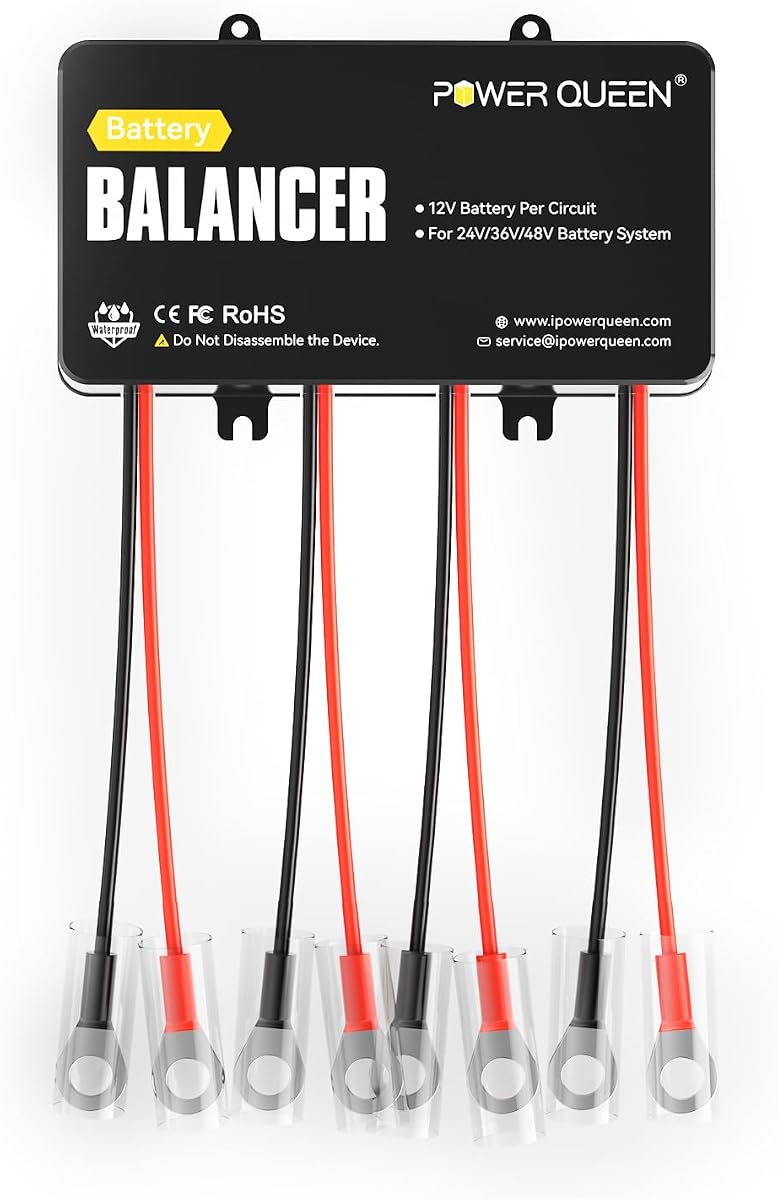
The Power Queen Battery Balancer 48V offers an accessible entry point for anyone looking to protect their battery bank without breaking the bank. It carries a solid user rating and focuses on core balancing needs with intelligent activation based on voltage thresholds. This model is designed to integrate smoothly into 24V 36V and 48V systems common in recreational and remote power applications.
We may earn a commission when you buy through this link, at no additional cost to you.
Its automatic activation ensures that balancing only occurs when needed which helps conserve energy during periods of stability. The low power standby mode draws minimal current making it suitable for long term connection without draining your storage capacity significantly. Safety features like reverse polarity protection add value by reducing the risk of damage during installation or unexpected wiring faults.
Users should note that while it handles many standard battery types it is best used in configurations where batteries are connected in series or parallel groups. The lack of manual controls means you rely entirely on its internal logic for operation which may not suit highly customized setups. Still for most consumers the balance of cost and functionality makes it a smart practical choice.
Choose this balancer if you need a reliable and affordable way to maintain voltage health across your battery strings in an RV or home storage project. It simplifies the maintenance burden and helps ensure your system runs efficiently year after year without complex monitoring or intervention. Verify current stock and compatibility details before placing your order to confirm it meets your specific needs.
The device switches to low power mode when balanced preserving your battery energy for actual loads instead of overhead.
Built in safeguards protect both the balancer and your batteries from common wiring mistakes or thermal overload risks.
We may earn a commission when you buy through this link, at no additional cost to you.
Victron Energy has long been respected for quality power management gear and this balancer continues that tradition with precise voltage equalization. It is engineered to eliminate load imbalance effects which helps improve the life of your battery bank significantly over time. The unit activates when system voltage rises above a threshold to compare and balance series connected batteries automatically.
We may earn a commission when you buy through this link, at no additional cost to you.
Its design allows multiple units to be paralleled which offers flexibility for larger banks such as 48V setups that need more capacity. The one amp draw capability ensures that balancing currents are sufficient to equalize charge states without overtaxing the batteries during the process. This approach leads to a more consistent state of charge across all connected strings for better performance.
The main consideration is that you may need to purchase several units to cover larger multi battery configurations which increases the total investment. Also the device is optimized for specific voltage ranges so you must match it carefully to your bank architecture for best results. Despite the cost the reliability and performance consistency it delivers justify the expense for demanding applications.
Ideal for professional marine or off grid installations this balancer provides the precision needed to keep critical battery systems healthy. It is a premium choice for those who prioritize long term durability and brand trust over initial cost savings. Review the installation requirements to ensure your system benefits fully from its balancing capabilities before making the investment.
You can combine several balancers to handle larger voltage systems providing flexibility as your power needs grow.
The trusted brand ensures consistent performance and quality build which reduces the risk of failure in critical setups.
We may earn a commission when you buy through this link, at no additional cost to you.
The iSunergy battery equalizer distinguishes itself with broad compatibility across many battery chemistries and voltage configurations. It supports both lead acid and lithium options as well as nickel based types making it versatile for diverse project needs. Each module targets single battery ranges between seven and eighteen volts allowing you to scale up by connecting more units together.
We may earn a commission when you buy through this link, at no additional cost to you.
Its rail type buckle installation simplifies mounting inside distribution boxes which keeps wiring organized and accessible for maintenance. This design choice is particularly useful in crowded enclosures where space is limited and tidy cabling matters. The device helps maintain charge balance between series or parallel strings to extend service life and prevent uneven discharge issues.
While the modular approach allows for high total system voltage it does mean you will need multiple balancers for larger banks. The compact size is convenient but may be harder to access if you need to adjust settings or inspect connections frequently. These factors are minor compared to the flexibility it offers for custom battery configurations that demand precise balance.
Select this option if you are working with varied battery types or need a compact solution that fits into tight electrical panels. It is a strong candidate for engineers or DIYers who value adaptability and organized installation practices. Ensure you have enough modules to cover all batteries in your bank for consistent performance across the system.
It works with lead acid lithium and nickel batteries giving you freedom to mix or upgrade battery types later.
The rail buckle system allows neat integration into existing electrical boxes without extensive custom mounting work.
We may earn a commission when you buy through this link, at no additional cost to you.
The HC02 Balancer offers a practical solution with an integrated LED display that lets you see voltage status at a glance. It supports four twelve volt batteries in series or parallel which covers many common 48V setups found in recreational vehicles. The device includes intelligent protection features that help keep your batteries healthy by managing connection risks during operation.
We may earn a commission when you buy through this link, at no additional cost to you.
Its low voltage disconnect function helps prevent deep discharge damage which is a common cause of premature battery failure. This feature adds an extra layer of security beyond simple balancing by actively cutting off power when levels drop too low. The reverse polarity protection ensures that accidental wiring mistakes do not lead to costly equipment damage or safety hazards.
While the unit has a lower rating compared to others it still provides useful monitoring capabilities that some users find reassuring. The LED display might consume a small amount of power but this is usually negligible compared to the benefits of real time visual feedback. Consider if the visual confirmation of status outweighs the potential trade offs in efficiency for your needs.
This balancer is a good fit for those who prefer direct visual confirmation of battery health during system operation and maintenance. It works well in applications where quick status checks are valuable without needing extra meters or tools. Verify compatibility with your exact battery configuration to ensure the four module setup matches your bank requirements.
The built in LED display gives instant feedback on battery voltages without needing external multimeters or tools.
Low voltage disconnect prevents dangerous deep discharge conditions that can permanently damage battery capacity over time.
We may earn a commission when you buy through this link, at no additional cost to you.
The Redodo Battery Balancer 24V is tailored for two twelve volt battery configurations which simplifies maintenance for smaller setups. It automatically begins working when pressure differences appear between the connected strings and maintains balance throughout discharge and charge cycles. This active approach ensures that your batteries remain at the same state of charge for consistent power delivery.
We may earn a commission when you buy through this link, at no additional cost to you.
With a maximum equalization current of ten amps this model can handle significant voltage imbalances quickly to restore system harmony. The LED display clearly shows voltages of both strings so you can verify performance without needing additional tools or meters. A one year warranty plus technical support adds confidence to the purchase by backing the product reliability and service.
The fixed cable length might be a limitation if your battery terminals are spaced farther apart than the included wires reach. Also its focus on twenty four volt systems means it is not suitable for higher voltage banks unless you use multiple units. These constraints are manageable if you design your setup with these parameters in mind from the start.
Choose this balancer if you have a standard twenty four volt system and value a clear view of battery health during operation. Its support infrastructure and warranty make it a trustworthy option for users who want assistance if issues arise. Confirm terminal spacing before installation to ensure the cables reach comfortably without stretching or strain.
High current capability allows the device to resolve voltage gaps rapidly and restore balance across your battery strings.
A dedicated warranty and technical support team ensure you have help available if you encounter setup or use issues.
We may earn a commission when you buy through this link, at no additional cost to you.
This Power Queen model offers similar core functionality to its sibling balancer while focusing on value and broad compatibility across voltage systems. It supports twenty four to forty eight volt battery banks and activates automatically when voltage discrepancies are detected to keep your system stable. The active balancing technology helps extend battery life by reducing stress caused by uneven charge states during use.
We may earn a commission when you buy through this link, at no additional cost to you.
Safety is addressed through reverse polarity protection which guards against wiring mistakes that could harm the unit or your batteries. High temperature protection further ensures that internal components do not overheat under heavy load or poor ventilation conditions. These safeguards provide peace of mind that the device will operate reliably in demanding environments over time.
The lack of an integrated display or manual controls means you rely on its automated processes which may limit fine tuning options. It is designed to work in the background without user intervention so it is best for users who want set and forget operation. This simplicity can be a benefit if you prefer minimal complexity in your power management setup.
Consider this option if you need a reliable and affordable solution for larger battery banks that do not require advanced monitoring features. It fits well in standard RV or solar installations where consistent voltage balance is the primary goal. Verify your bank configuration to ensure the four port design matches your connection needs before purchasing.
Fully automatic activation means you do not need to adjust settings or intervene during normal system operation cycles.
Built in temperature protection prevents overheating which keeps the unit safe even in warm or poorly ventilated locations.
We may earn a commission when you buy through this link, at no additional cost to you.
This universal battery equalizer supports multiple chemistries from lead acid to lithium and nickel types with flexible usage across common voltage systems. It can be paired with other balancers to reach higher total voltages which makes it adaptable for custom battery bank designs. The five amp compensation current triggers automatically when voltage discrepancy exceeds ten millivolts to maintain balance consistently.
We may earn a commission when you buy through this link, at no additional cost to you.
Smart indicator lights provide clear visibility of working status which helps you confirm that balancing is active without needing extra tools. This feature is particularly helpful in dark or remote locations where visual confirmation speeds up troubleshooting and maintenance checks. Low voltage cutoff adds another layer of protection to safeguard battery health during discharge cycles.
The compact size may limit heat dissipation during continuous use in hot environments so ventilation matters for optimal performance. Also the basic materials and build may not suit industrial grade applications that demand ruggedness or long term exposure to harsh conditions. For typical recreational use it provides the necessary functionality in a small and affordable package.
Opt for this model if you have space constraints and need a solution that can scale by adding more units as your system grows. It is a practical choice for hobbyists or homeowners who want simple reliable balancing without complex wiring or monitoring. Check your ventilation and temperature conditions to ensure the unit stays within safe operating limits.
Smart lights show real time operation status so you can quickly confirm the device is active and functioning correctly.
You can connect multiple balancers in parallel to reach higher voltages giving you flexibility as your project expands.
We may earn a commission when you buy through this link, at no additional cost to you.
The HA01 Battery Equalizer provides a digital LED display that gives precise voltage readings to users without needing external multimeters. It is designed for series connections of twelve volt lead acid and lithium packs to maintain balance and extend overall battery life. The compensation current ranges from zero to five amps which adjusts automatically based on detected voltage differences between batteries.
We may earn a commission when you buy through this link, at no additional cost to you.
Its high precision chips reduce voltage deviation which ensures that the balancing process is accurate and does not overshoot. The flame retardant shell adds safety during operation which is valuable when the unit is mounted in enclosed spaces with other electronics. Low voltage disconnection protects the bank from damage by cutting power if levels drop too low during use.
The fixed wire colors and connection style might require you to match polarity carefully as you set up the system. While the shell is safe it may not dissipate heat as effectively as open designs so airflow placement is important. These considerations are minor but worth noting to ensure the device runs reliably over extended periods.
Select this unit if you value digital clarity and precision in your battery monitoring and balancing tasks across varied setups. It works well in applications where knowing exact voltage levels helps you make informed decisions about charging or loads. Confirm your battery types match the supported list before installation to avoid compatibility issues during operation.
High precision chips ensure accurate balancing which prevents over or under compensation that could stress your batteries.
The flame retardant shell protects surrounding components from heat or fire risks during unexpected operational events.
We may earn a commission when you buy through this link, at no additional cost to you.
The MAZAVA Battery Equalizer HX02 features an LCD display that provides detailed monitoring alongside its active balancing capabilities for battery banks. It supports multi module parallel connection which gives you flexibility to build balanced systems across many configurations. The unit handles single battery voltages between seven and eighteen volts which covers most standard twelve and twenty four volt cells easily.
We may earn a commission when you buy through this link, at no additional cost to you.
Its aluminum alloy shell aids heat dissipation which helps maintain stable performance during long balancing sessions or warm environments. This build choice is beneficial for reliability and reduces the risk of thermal throttling or failure under load. The fast equalizer function responds to voltage differences in thousandths to ensure precise convergence across all connected batteries.
The higher price reflects its advanced features and build quality but may not suit budget focused projects without monitoring needs. Also the setup may require more attention to wiring and configuration compared to simpler passive options that do not offer display data. If you value detailed insight and robust cooling this model justifies the cost for critical power systems.
Invest in this balancer if you need a monitor capable tool that tracks voltage closely while actively equalizing your battery bank. It is ideal for users who want data visibility and strong construction for demanding off grid or marine power applications. Review your system voltage and module needs to confirm the four slot design matches your bank architecture.
The LCD display gives you real time data on voltage and balance so you can track performance accurately.
Aluminum alloy housing helps dissipate heat to keep the unit cool and stable during continuous operation.
We may earn a commission when you buy through this link, at no additional cost to you.
Choosing the right battery equalizer requires understanding your bank configuration and the level of protection you need. This guide outlines key factors to consider so you can match a balancer to your application with confidence.
Ensure the balancer supports your battery bank's total voltage and individual cell ranges to avoid operational failures or limited effectiveness. Most devices specify a maximum voltage such as 48V but you must also check the range for single cells to confirm they align with your chemistry.
Match the device voltage ratings to your specific series parallel setup to guarantee reliable performance across all connected batteries.
Higher current capacity allows the balancer to correct voltage differences more quickly which is vital for larger banks or higher capacity cells. A model with 10A can handle more significant imbalances than one rated at 5A but may require thicker wiring to avoid resistance losses.
Select a current rating that suits your bank size and expected imbalance speed to maintain efficient balancing cycles.
Different chemistries like LiFePO4 lead acid or nickel cadmium have unique voltage profiles and balancing needs that require specific device settings or algorithms. Verify the balancer explicitly supports your battery type to prevent errors or ineffective equalization that could shorten battery life.
Confirm compatibility with your specific battery chemistry to ensure safe and accurate voltage equalization.
Look for features like reverse polarity protection and temperature safeguards to prevent damage during installation or operation in hot conditions. These protections add a layer of security that can save your equipment from costly failures due to common mistakes or environmental stress.
Prioritize models with multiple built in safety features to protect both the balancer and your battery bank from avoidable risks.
Units with LED or LCD displays give you immediate insight into voltage levels and balancing status which simplifies troubleshooting and routine checks. If you prefer minimal setup a basic model without a screen may be sufficient but expect less visibility into system health.
Decide if visual feedback is worth the added cost and power draw based on your monitoring preferences and application needs.
Consider how the unit mounts such as rail buckle or direct wiring and whether it fits comfortably in your distribution box or enclosure. Easy installation saves time and reduces the risk of wiring errors which helps ensure the balancer works correctly from day one.
Choose a mounting style that fits your available space and wiring layout to streamline setup and maintenance tasks.
Balancers that enter standby when balanced draw minimal power which is crucial for off grid systems where every watt counts toward your loads. Verify the standby draw is low enough not to interfere with your battery capacity or energy budget over long periods.
Opt for units with low power standby modes to maximize efficiency and avoid unnecessary battery drain.
A reliable warranty and responsive technical support can make a difference if you encounter issues during setup or regular operation over time. Brands that offer dedicated service channels often provide more confidence in product longevity and compatibility with your system.
Check warranty terms and support availability before buying to ensure you have assistance if problems arise with the device.
Start by confirming that your battery bank voltage matches the balancer's supported range and that all connections follow the manufacturer's wiring guide. Install the device near the batteries you are balancing so that cable runs are short and resistance stays low for efficient operation.
Allow the unit to remain connected continuously so it can monitor voltage and balance cells whenever differences appear above the set threshold. Do not remove it during normal use as its ongoing presence is what prevents uneven discharge and helps extend battery life over time.
Periodically inspect all terminals and cables for signs of corrosion or loosening and clean them as needed to maintain good electrical contact. Keep the area around the balancer clear of debris to ensure proper airflow and prevent overheating during active balancing cycles.
Not all balancers support every chemistry so check that the model you choose lists your battery type such as LiFePO4 lead acid or nickel. Using a mismatched device can lead to ineffective balancing or even damage due to different voltage curves. Always verify compatibility before installation to avoid problems during operation.
The time depends on the initial voltage difference and the current capacity of the balancer with higher amps correcting faster. Small imbalances may resolve in minutes while larger ones can take hours or more depending on conditions. Let it run continuously for best results and avoid disconnecting it during the process.
Yes many models allow you to connect units in parallel to scale up to higher voltages like 48V or more. Follow the manufacturer wiring guide to ensure each module covers the correct segment of your battery bank for accurate balancing. Proper planning prevents overloading one device and distributes the work evenly.
Most balancers include an auto standby mode that turns off or reduces power when voltage differences are below a set threshold. This feature helps save energy while still keeping the device ready to react if imbalance grows again later. It ensures efficient operation without unnecessary power drain during stable periods.
Basic hand tools such as wire strippers screwdrivers and a multimeter are usually enough for standard installations. Make sure you have the correct gauge wire for the current ratings and that connections are tight to avoid resistance or heat. Some units include cables which simplifies the process further for most users.
A balancer helps maintain equal charge but cannot restore a cell that has failed or gone below safe voltage levels. You should replace damaged batteries before installing a balancer to avoid repeated stress on the rest of the bank. This approach protects your investment and ensures the balancer works as intended over time.
The ten models reviewed here cover a wide range of needs from budget friendly options to advanced units with displays and modular scaling. Each offers core protection and balancing that can extend the life of your battery bank when chosen to match your system.
Prioritize compatibility with your specific battery chemistry and voltage setup while considering features like standby power and protection safeguards. A balancer that fits your exact configuration will deliver the most reliable performance and reduce the need for manual intervention.
Prices and availability change regularly so check current listings before you buy to confirm you have the latest details and offers. With the right choice you can enjoy stable power and longer battery life across your RV solar or off grid projects with confidence.