
SVBONY SV172 Dew Heater, Lens Warmer 240mm, Universal for Telescope Camera
4.6Editor score
USB powered
240mm length
3 gear heating
Aluminum heating plate
Dew formation on telescope optics can ruin a night of observing or imaging. A reliable dew heater keeps your lenses and mirrors warm enough to prevent condensation from forming. Selecting the right one depends on your equipment size and power needs.
We evaluated ten popular dew heaters based on heating efficiency, compatibility, and ease of use. Our comparison covers USB and 12V options, various sizes, and control features. This list helps you find a solution that fits your specific telescope or camera setup.
Each pick highlights key strengths, potential drawbacks, and ideal use cases. You will see detailed specs and pros and cons for every model. Remember that product availability and pricing can change, so verify details before purchasing.
4.6Editor score

4.7Editor score

5.0Editor score
As an Amazon Associate we earn from qualifying purchases.
The following table provides a side-by-side overview of all ten selected dew heaters. It highlights key specifications like power source, length, and unique features to help you compare options quickly.


The SVBONY SV192 is a robust solution for astronomers using larger telescopes. It features a 480 mm strip designed to wrap around primary mirrors up to 152 mm. Its high rating reflects consistent performance in preventing fog and freezing.
We may earn a commission when you buy through this link, at no additional cost to you.
This heater includes a 3-speed regulator allowing you to tune heat output. The SBR and Black-T three-layer insulation helps retain heat efficiently. The female 5.5X2.1 interface connects easily to standard 12V power inputs.
While effective, this model needs a dedicated 12V source. Its length might be excessive for smaller refractors or camera lenses. However, for those needing reliable heat for big optics, these trade-offs are acceptable.
Buyers with medium to large telescopes will appreciate its fit and control. It is a strong choice for serious observers who need consistent protection during cold nights. We recommend it as a top pick for general use.
The regulator lets you switch between weak and medium modes. This helps match heat to humidity levels without wasting power.
Three-layer heat preservation material reduces dissipation. This keeps the lens warm longer and improves efficiency.
We may earn a commission when you buy through this link, at no additional cost to you.
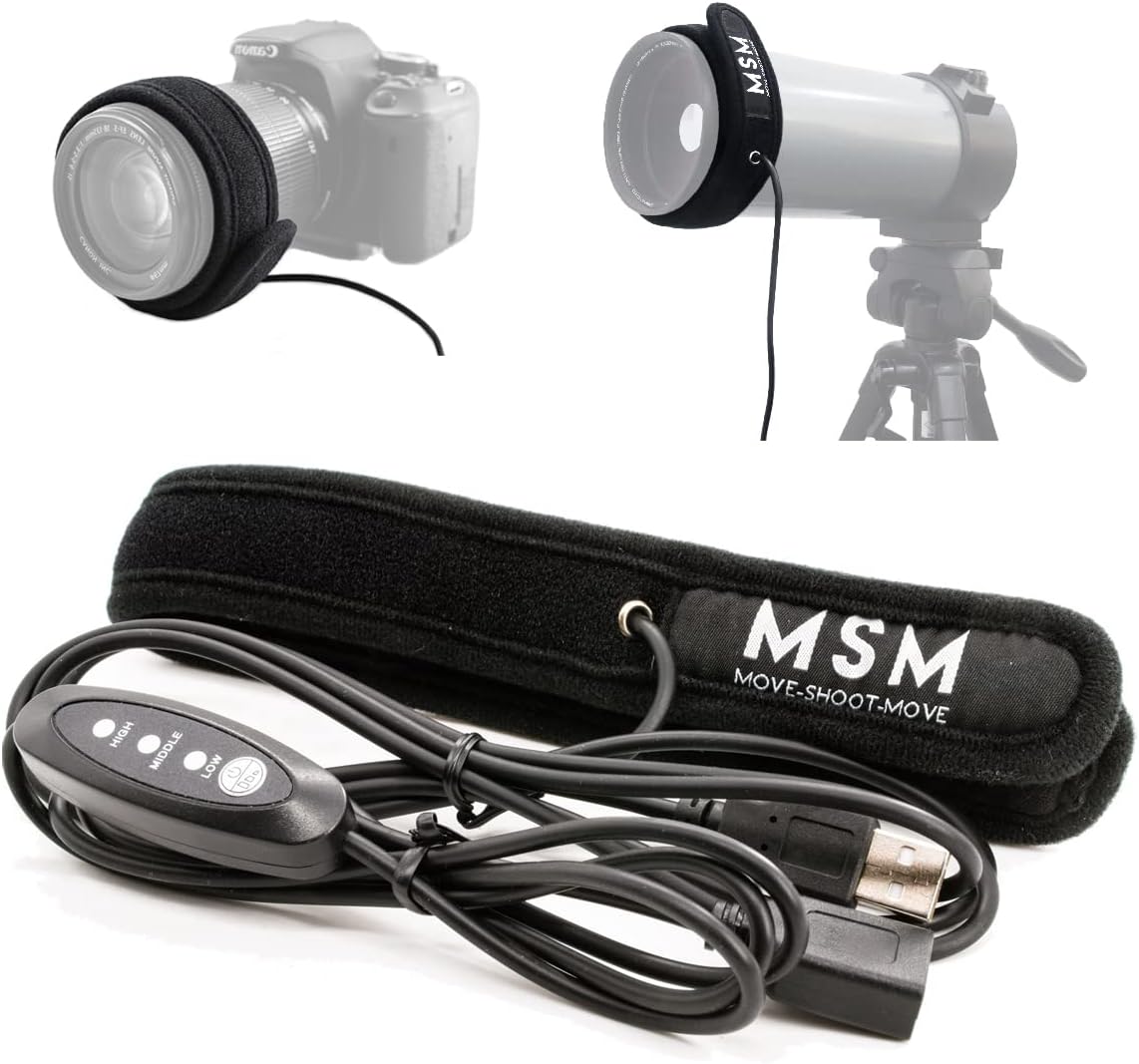
This SVBONY model offers a lightweight USB option for smaller optics. The 240mm strip fits lenses and telescope objectives below 76mm. It uses a 1.8m USB cable for flexible connection to power banks.
We may earn a commission when you buy through this link, at no additional cost to you.
Three gear heating modes let you adjust temperature quickly. An aluminum plate ensures even warmth across the strip. It also works as a general warmer for water bottles or wrist straps.
The limited diameter makes it unsuitable for large apertures. USB power may be slower than a 12V source. Still, for casual observers or astrophotographers with smaller gear, it is very cost-effective.
It is ideal for those wanting simplicity and portability. The low weight ensures it does not burden your setup. Consider this if you need a reliable budget-friendly solution.
Connects to any standard USB source. This is great for field use without heavy battery packs.
Aluminum alloy fiber wire ensures quick warmth. The insulation keeps heat from dissipating too fast.
We may earn a commission when you buy through this link, at no additional cost to you.
This R-Sky heater is known for its hand-assembled quality. It features a durable, flexible RCA power cord that stays soft even in freezing temperatures. The 5-star rating highlights user satisfaction with its reliability.
We may earn a commission when you buy through this link, at no additional cost to you.
The construction ensures even heat distribution across the optics. It comes in multiple sizes to fit various scopes. The special design prevents fogging, condensation, and frost effectively.
Premium components mean a higher cost than generic options. It requires an RCA connector on your power source. But for those seeking durability and flawless performance, this is a wise investment.
Ideal for serious astronomers who want a set-and-forget solution. The cord resists tangling and damage. We consider it the best premium option for consistent results.
The cord stays flexible in sub-zero conditions. This prevents cracking and ensures safe operation.
Each unit is built by hand. This ensures consistent quality and long-lasting performance.
We may earn a commission when you buy through this link, at no additional cost to you.
This model uses a neoprene strip that remains flexible even in cold weather. It reaches 167°F and includes a regulator for three levels of adjustment. The USB port makes it easy to use with power banks.
We may earn a commission when you buy through this link, at no additional cost to you.
The adhesive strap fastener allows quick attachment and removal. The material helps prevent heat loss efficiently. It is proven by field tests to work well for long exposures.
Its size range is limited to lenses under 4.26 inches. USB power might be slower for very large optics. However, its flexibility and portability make it great for astrophotographers.
Buyers looking for a portable solution will find it convenient. It is lightweight and works well in various conditions. Consider it for cameras or smaller telescope optics.
The material mimics a diving suit. It reduces heat loss effectively.
Plug into any USB source. This is ideal for backyard use.
We may earn a commission when you buy through this link, at no additional cost to you.
Designed for Celestron 8-inch Schmidt-Cassegrain and RASA lenses. This aluminum ring fits easily and quickly. It helps prevent dew on the corrector lens for clear viewing.
We may earn a commission when you buy through this link, at no additional cost to you.
It includes a cable management clip to organize wires. The lightweight aluminum supports the cable circuitry. It runs on an external 12V DC power source.
This model is highly specific to certain scopes. It may not work for other brands or sizes. But for Celestron owners, it provides a tailored fit and reliable performance.
Ideal for users wanting a direct accessory from the manufacturer. The warranty and support are strong points. Choose this if you have a compatible telescope.
Fits all 8-inch Celestron corrector lenses. This ensures no slipping or gaps.
Includes a cable management clip. This helps reduce unnecessary weight and tangles.
We may earn a commission when you buy through this link, at no additional cost to you.
This NEEWER heater offers a 600mm strip for large lenses. It warms gently to prevent fogging efficiently. The USB design allows connection to laptops or portable chargers.
We may earn a commission when you buy through this link, at no additional cost to you.
Three temperature levels range from 35 to 65 degrees Celsius. Touch fasteners allow quick adjustment. The lightweight material does not add bulk to your gear.
The USB power limits heating power for very cold nights. The effective length is 500mm, not full 600mm. Still, it is versatile for DSLR lenses and small telescopes.
Buyers who travel or shoot outdoors will find it useful. The fasteners make it easy to wrap. Consider this for multi-purpose photography and astronomy.
Crafted from lightweight material. It avoids adding bulk to your equipment.
Offers three levels of heat. This helps match varying weather conditions.
We may earn a commission when you buy through this link, at no additional cost to you.
This heater provides a knob for stepless temperature regulation. It runs on USB power. The 25cm strip fits lenses with diameters under 80mm.
We may earn a commission when you buy through this link, at no additional cost to you.
You can adjust the heat by sliding the knob. It also works as a warmer for water bottles or as a wrist strap. This adds value for those needing extra utility.
The short length makes it unsuitable for large optics. The build is basic compared to higher-end models. But for small setups, it offers good value.
Buyers on a tight budget will appreciate this. The multi-use aspect is a bonus. Consider it for portable astronomy gear.
Sliding the knob lets you set exact heat. This offers more precision than fixed gears.
Can warm bottles or act as a strap. This makes it versatile beyond astronomy.
We may earn a commission when you buy through this link, at no additional cost to you.
This set includes five bands in sizes from 4 to 37 inches. It operates on 12V DC power through RCA connectors. This allows compatibility with most portable power sources.
We may earn a commission when you buy through this link, at no additional cost to you.
The bands feature secure fastening mechanisms for quick setup. They prevent condensation on optics effectively. Each band is adjustable for a snug fit.
Having multiple sizes makes it great for households with different scopes. But you need an RCA connection for power. This is a practical choice for varied equipment.
Buyers wanting one solution for multiple lenses will like it. The variety ensures you can cover various setups. Consider this if you own several optical instruments.
Includes five different band sizes. This covers everything from eyepieces to large tubes.
Uses standard RCA connectors. This ensures compatibility with many existing power setups.
We may earn a commission when you buy through this link, at no additional cost to you.
This USB warmer withstands temperatures as low as -40 degrees Celsius. It is ideal for cold environments where freezing is a risk. The regulator offers low, medium, and high modes.
We may earn a commission when you buy through this link, at no additional cost to you.
It fits lenses under 80mm. The design prevents fogging without affecting equipment function. The insulation is good to transfer heat quickly.
The size limit makes it best for smaller optics. USB power is standard but limited. Still, its cold resistance is a standout feature.
Buyers in very cold climates should consider this. The price point is accessible. It provides reliable protection against extreme weather.
Withstands temperatures to -40C. This ensures operation in harsh winter conditions.
Materials transfer heat fast. This keeps your lens dry without delays.
We may earn a commission when you buy through this link, at no additional cost to you.
This strip is designed for 6-inch telescopes and 150mm refractors. It uses standard RCA plugs. The hand-assembled build ensures consistent heat distribution.
We may earn a commission when you buy through this link, at no additional cost to you.
The power cord is 47 inches and tangle-free. It stays soft in freezing conditions. It works with common dew controllers.
It may be pricier than generic brands. Requires 12V power source. However, the fit and reliability are excellent.
Buyers with 6-inch scopes will find it ideal. The long cord helps with setup. We recommend this for consistent dew control.
Works perfectly with 150mm refractors. This offers precise coverage for your aperture.
The cord is soft and flexible. This prevents tangling even in freezing conditions.
We may earn a commission when you buy through this link, at no additional cost to you.
Selecting the right dew heater involves understanding your optical equipment and power availability.
Ensure the strip covers the circumference of your optical tube. Too short leaves gaps; too long may wrap too tightly.
Measure your lens or mirror diameter and add extra for overlap when choosing a model.
USB models are portable but may lack power for large optics. 12V units are stronger but need a dedicated battery or mains.
Check if your power bank supports the required current draw before buying.
A regulator allows you to adjust heat to match humidity levels. Fixed models may overheat or underperform.
Look for at least three settings or stepless control for precise management.
High-quality materials like neoprene help retain heat efficiently. Cheaper plastics may dissipate warmth too quickly.
Thermal insulation helps reduce power usage and improves overall effectiveness.
Secure fasteners or adhesive straps ensure the heater stays in place during observation. Loose strips can fall off in the dark.
Choose designs that wrap easily without putting pressure on delicate lens coatings.
Some wires and cords become brittle in freezing temperatures. Ensure the materials remain flexible at sub-zero temperatures.
Cold-resistant power cords are essential for winter astronomy to avoid breakage.
RCA connectors allow integration with advanced dew controllers. USB ports are simpler but offer less control.
If you use a multi-port controller, verify the connector type matches.
Reputable brands often offer better support and longer warranties. This is useful if a heater fails during the season.
Check the warranty length and support options before finalizing your purchase.
Attach the heater to your optical tube and secure it with straps or adhesive. Make sure it is snug but not so tight that it damages the tube.
Connect the power source and set the regulator to a low or medium setting. Start heating before dew forms to maintain a consistent temperature.
After use, allow the heater to cool down before storing. Keep it in a dry place to prevent any damage to the wiring or insulation.
Not necessarily. Refractors and catadioptric scopes are more prone to dew. Reflectors are less prone but may still benefit in high humidity. Assess your local climate and frequency of dew before deciding.
Most USB units draw around 1 to 2 amps. 12V units can draw up to 3 amps. Calculate total draw if using multiple heaters to avoid draining your battery too quickly.
Yes, but ensure the heater fits around the camera or lens without obstructing the sensor. Many models are designed specifically to protect camera optics while allowing clear viewing.
Overheating can warp optics or create convection currents that distort your view. Use a regulator to keep temperatures just above the dew point rather than setting it to maximum.
Yes, as long as the power bank provides enough current. Check the heater's specs and ensure your power bank can sustain the required amperage throughout the night.
Wipe the surface gently with a soft, dry cloth. Avoid submerging the strip or using harsh chemicals, as this can damage the insulation and heating wire.
They consume steady power but are efficient due to insulation. A typical night may drain 20 to 50 percent of a standard power bank depending on the heater size.
Yes, but it is best to set it to a low level once dew stops forming. Monitoring power levels helps ensure you do not drain your battery before morning.
We reviewed ten top dew heaters for telescope, covering USB and 12V options. The SVBONY SV192 and R-Sky models stood out for overall performance and durability.
Prioritize size, power source, and control features based on your gear. Small setups can benefit from USB, while large scopes need stronger 12V units.
Always check current pricing and availability before buying. These products evolve, so verify specs to ensure the best fit for your telescope.