
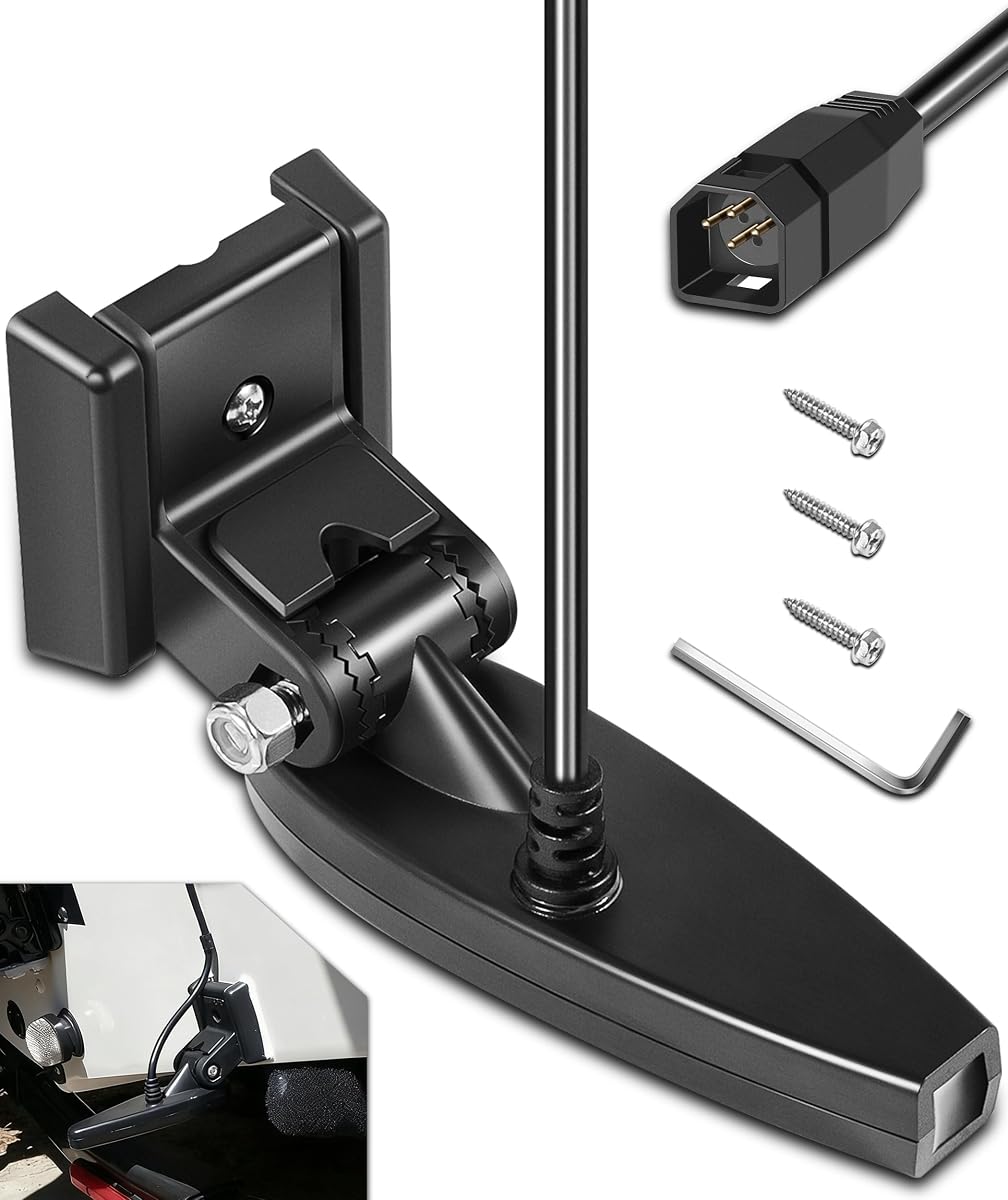
Humminbird 710200-1 XNT 9 SI 180 T
4.6Editor score
Side and Down Imaging
Helix series compatible
Affordable price point
Transom mount design
This guide compares the top 10 down and side imaging transducer models for 2026, reviewing features, compatibility, and performance to help anglers choose.
Finding the right sonar equipment is crucial for modern anglers seeking precision. A down and side imaging transducer provides clear views of underwater structures and fish, transforming how you locate targets in various water conditions.
We evaluated ten leading models based on resolution, frequency range, and compatibility. Each product was analyzed for build quality, cable length, and specific imaging capabilities to ensure they meet diverse fishing needs effectively.
Every selection highlights unique strengths and potential limitations for buyers. Prices fluctuate based on market demand and availability, so check current listings before purchasing to secure the best deal for your setup.
4.6Editor score

5.0Editor score

4.6Editor score
This table offers a side-by-side comparison of all ten products. It highlights key specifications and image capabilities to help you quickly identify the model that fits your fish finder and budget requirements.



This top-rated transducer offers unmatched clarity for anglers seeking precision. Its 5.0 rating reflects consistent performance in revealing fish and structure underwater.
We may earn a commission when you buy through this link, at no additional cost to you.
The dual frequency imaging at 455 kHz and 1.1 MHz provides superior detail. You can identify rockpiles and weedbeds with remarkable accuracy from a distance.
The only trade-off is the premium cost and specific compatibility. However, the clarity justifies the investment for serious fishermen using SOLIX or XPLORE units.
Buyers prioritizing image quality should choose this model. It stands out as the most capable tool for finding fish-holding structures.
The compact MEGA Side Imaging+ technology delivers unmatched clarity for identifying structures and fish targets.
Users gain a massive 400-foot scanning range which allows for wide-area searching efficiently.
We may earn a commission when you buy through this link, at no additional cost to you.
The Active Imaging 3-in-1 delivers refined detail for distinguishing fish from structure. It integrates CHIRP and SideScan for comprehensive viewing capabilities.
We may earn a commission when you buy through this link, at no additional cost to you.
FishReveal technology helps identify targets quickly on a single screen. This reduces guesswork and improves accuracy when locating fish-holding areas.
It requires compatible displays and potentially an adapter cable for setup. Users must ensure their unit supports these advanced imaging frequencies.
Investors in Lowrance systems will appreciate the clarity. It represents the best premium option for high-end navigation systems.
This smart view feature combines sonar data to make fish identification easier on high-detailed images.
High-level clarity helps anglers recognize rockpiles and standing timber at greater distances.
We may earn a commission when you buy through this link, at no additional cost to you.
This model provides essential imaging features at an affordable price. It is an excellent choice for entry-level Helix users.
We may earn a commission when you buy through this link, at no additional cost to you.
It covers both side and down imaging effectively for basic needs. The transom mount design ensures stability during operation.
It may lack the advanced resolution of newer MEGA units. However, the performance remains strong for standard fishing tasks.
Budget-conscious anglers seeking reliable imaging should consider this. It delivers consistent results without a high price tag.
A budget-friendly solution for essential imaging needs on a standard Helix fish finder unit.
Supports both Side Imaging and Down Imaging to cover multiple search angles.
We may earn a commission when you buy through this link, at no additional cost to you.
This transducer brings MEGA imaging to XPLORE and APEX units effectively. It provides clear views of underwater structures for anglers.
We may earn a commission when you buy through this link, at no additional cost to you.
The 125-foot side range helps detect fish holding near cover. The temperature sensor adds useful data for planning casts.
Some users report a lower rating compared to newer units. Compatibility remains strictly tied to supported Humminbird models.
Users needing MEGA imaging on these systems will find it useful. It is a solid choice for expanding sonar capabilities.
Provides clear pictures of what is below with extended range and high detail.
Includes a 20-foot cable and temperature sensor for immediate setup.
We may earn a commission when you buy through this link, at no additional cost to you.
This is a full fish finder package including a transducer. It offers MEGA Side Imaging for high-resolution views of targets.
We may earn a commission when you buy through this link, at no additional cost to you.
AutoChart Live allows mapping depth contours while boating. The Dual Spectrum CHIRP provides detailed fish and structure data.
As a bundle, it costs more than a standalone transducer. It is best for new setups or unit upgrades.
Anglers wanting a complete system will appreciate the features. It is a reliable all-in-one solution for navigation.
View fish and contours with three times more detail than standard sonar.
Includes basemap coverage of over 10,000 lakes.
We may earn a commission when you buy through this link, at no additional cost to you.
Designed specifically for Helix 7 G4 units this transducer delivers CHIRP sonar. It offers clear returns for fish and structure imaging.
We may earn a commission when you buy through this link, at no additional cost to you.
The side and down imaging at 455 kHz provide good detail. It includes all necessary hardware for installation.
It does not support MEGA imaging models. Ensure your unit is compatible before purchasing.
Helix 7 owners will find this a solid match. It enhances imaging capabilities significantly for this series.
Clean returns in a range of 150-220kHz for better detail.
Includes temperature sensor and mounting hardware for easy setup.
We may earn a commission when you buy through this link, at no additional cost to you.
This model brings Active Imaging to Lowrance displays with a 6-foot cable. It supports SideScan and DownScan for comprehensive views.
We may earn a commission when you buy through this link, at no additional cost to you.
CHIRP technology ensures better target separation than standard sonar. It fits well for smaller boats where reach is less critical.
The short cable length may limit transom placement. An adapter cable is often required for connection.
Small boat anglers will find it efficient. It offers high clarity for detailed imaging within a shorter reach.
See structure with a new level of refined detail and range.
Requires adapter cable for proper connection to displays.
We may earn a commission when you buy through this link, at no additional cost to you.
This kit includes the Active Imaging 2-in-1 transducer and fittings. It is designed for Side Scan and Down Scan at 455/800kHz.
We may earn a commission when you buy through this link, at no additional cost to you.
The refined detail helps identify rock piles and weed beds easily. It integrates well with Elite Ti and GO series.
Compatibility requires specific Simrad or Lowrance displays. It is a robust solution for compatible setups.
Anglers using these specific units will value the clarity. It provides high-quality imaging with reliable hardware.
High-level clarity and target separation help identify fish-holding structure.
Supports Side Scan and Down Scan for broad coverage.
We may earn a commission when you buy through this link, at no additional cost to you.
This transducer provides sharp Down Imaging and DualBeam PLUS sonar. It uses 75 and 45-degree angles for high-resolution details.
We may earn a commission when you buy through this link, at no additional cost to you.
The impact-release bracket protects against damage in rough waters. It is compatible with a wide range of HELIX models.
It focuses primarily on Down Imaging rather than Side Imaging. Ensure you need this specific function before buying.
Users seeking clear bottom views will find it effective. It offers reliable performance for identifying fish holding cover.
Combines two beams for great detail and a wide coverage area.
Includes impact-release bracket and 20-foot cable for secure mounting.
We may earn a commission when you buy through this link, at no additional cost to you.
This version offers clear fish-eye views using 455/800 kHz. It provides DualBeam PLUS for detailed underwater structure scanning.
We may earn a commission when you buy through this link, at no additional cost to you.
It fits legacy HELIX Down Imaging models effectively. The transom mount ensures stability during various water conditions.
It lacks Side Imaging features found in higher end models. It is best for those focused on bottom structure.
Legacy system owners will appreciate the clear imaging. It remains a solid choice for basic Down Imaging tasks.
Get a fish-eye view of what is happening below your boat.
Works with select HELIX and PiranhaMAX Down Imaging models.
We may earn a commission when you buy through this link, at no additional cost to you.
Selecting the right transducer requires careful evaluation of key factors. This guide outlines what to look for to ensure optimal performance.
Modern transducers use MEGA, CHIRP, or Active Imaging to improve clarity. Higher frequencies generally provide more detail but less depth.
Look for specific imaging technologies that match your needs for detail versus range.
Frequencies determine the balance between depth penetration and image detail. Lower frequencies go deeper while higher ones offer better resolution.
Choose a unit that covers the depth range of your typical fishing spots.
Ensure the transducer matches your fish finder model and connector type. Incompatible units may not work or require costly adapters.
Check compatibility charts before purchasing to avoid installation issues.
Transom mount is common for recreational boats due to easy installation. Other options include trolling motor or keel mounting.
Select a mount that fits your boat structure and usage style.
Cable length affects installation flexibility. A 20-foot cable is standard but larger boats may need longer runs.
Verify the cable length meets your boat's transom to display distance.
Transducers face impacts and rough water conditions. Impact-release brackets protect against damage from strikes.
Look for durable materials and protective features for longevity.
Built-in temperature sensors provide valuable environmental data. They help track fish behavior and water conditions.
Consider models with sensors if you track water temp often.
Cost varies by features and brand. Higher-end models offer better resolution but at a premium price.
Set a budget that balances performance needs with affordability.
Install the transducer so the face is flush and parallel to the water surface. Ensure the face is submerged to avoid air pinging which can damage the unit.
Use the impact-release bracket if available to prevent damage from debris. Check connections periodically to maintain secure signal transfer.
Rinse the unit with fresh water after saltwater use to prevent corrosion. Regular maintenance ensures consistent performance over time.
Down imaging scans directly beneath the boat for vertical structure. Side imaging scans to the left and right for a wide horizontal view.
No, MEGA imaging requires specific units like the HELIX G4 or SOLIX G3. Older models may not support the high frequencies needed.
Check your fish finder manual for a compatible transducer list. Ensure your mounting style matches the transducer requirements.
This often means air is trapped behind the transducer face or it is not submerged. Realign or submerge it to correct the issue.
Only if the fish finder supports CHIRP frequencies. Otherwise the signals will not be processed correctly by the display unit.
Yes, excessively long cables can degrade signals if not shielded properly. Use manufacturer recommended lengths for optimal performance.
This guide reviewed ten top models ranging from budget options to premium units. Each offers distinct advantages depending on your fish finder and specific needs.
Prioritize compatibility and imaging frequency to ensure clear views. High-resolution models provide better detail for structure identification.
Check current prices before purchasing as market values fluctuate often. Choose a model that fits your budget and technical requirements.