
22MP Film & Slide Scanner with 5" LCD
4.3Editor score
Affordable Entry Level Price
Simple One Touch Operation
HDMI And USB Outputs
Preserving your physical memories in a digital format is more important than ever before. A good film scanner to digital converter allows you to transform old negatives and slides into high resolution files that you can easily share and store online.
We have evaluated ten top rated devices based on their scanning resolution ease of use and compatibility with different film types. Our comparison focuses on standalone capabilities and screen size as well as output quality and overall value for money.
Each pick shows how the device handles specific film formats and what editing tools are available directly on the unit. Please note that prices change frequently so always check the current listing before making your final purchase decision.
4.3Editor score
4.3Editor score
4.3Editor score
As an Amazon Associate we earn from qualifying purchases.
The following table provides a side by side comparison of all ten models including their key specifications and unique features to help you decide which unit fits your specific digitization needs.




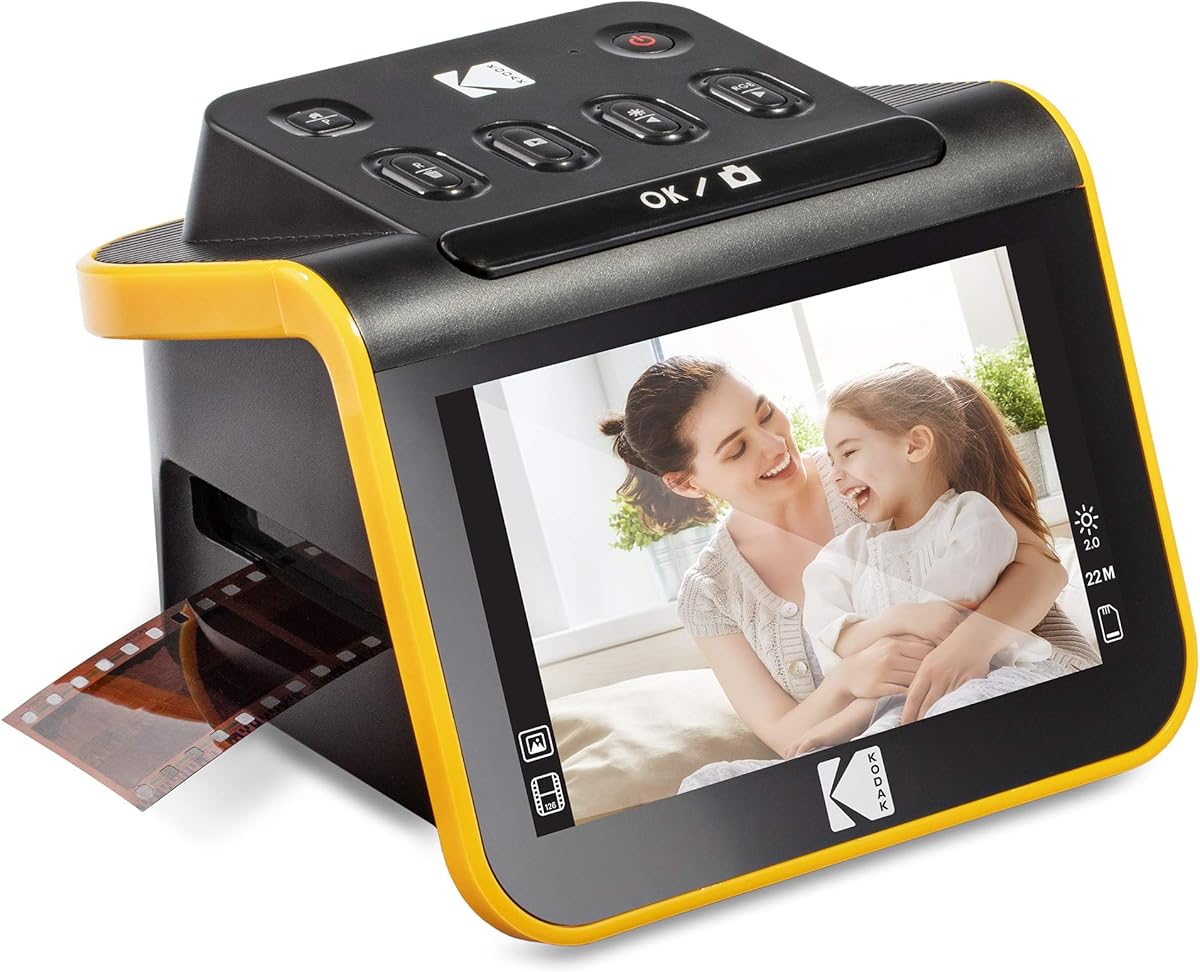
This KODAK model stands out as a reliable choice for those seeking a straightforward way to convert film to digital without needing a computer. It holds a solid rating and offers a user-friendly interface that makes digitization accessible to beginners.
We may earn a commission when you buy through this link, at no additional cost to you.
The device features a high resolution sensor and a large LCD screen that lets you preview images instantly. You can adjust brightness and color directly on the unit using the simple menus provided which saves time on post processing.
While it does not include an SD card out of the box the workflow is efficient and the quick loading trays make batch scanning manageable. The main limitation is that advanced color correction might require external software for professionals.
If you want a dependable machine that handles 35mm 110 and 126 film with ease this is an excellent starting point. It balances price and performance well for families looking to archive their physical photo collections.
The one touch scan button and intuitive display allow anyone to start converting memories immediately without technical training.
You can view and adjust your scanned images right on the device screen before saving them to the card.
We may earn a commission when you buy through this link, at no additional cost to you.
The Magnasonic scanner is designed to tackle a wider variety of film formats including the often difficult to digitize Super 8 reels. It boasts a higher resolution than many competitors making it suitable for detailed archival work.
We may earn a commission when you buy through this link, at no additional cost to you.
Its large display and HDMI capability mean you can show your results on a big screen right after scanning. This feature is great for family gatherings where you want to share memories without setting up a laptop.
Although it supports large SD cards the device requires you to purchase memory separately which adds to the initial cost. The setup is generally smooth but you must ensure you have the right adapters for your specific film.
This unit is ideal if you have mixed media including motion picture film and want a single device for all your scanning needs. The high resolution ensures that details in old slides are captured clearly for future viewing.
Unlike many basic scanners this model includes specific adapters for Super 8 film expanding its utility significantly.
Connect via HDMI to view your scans on a television for a more immersive sharing experience with guests.
We may earn a commission when you buy through this link, at no additional cost to you.
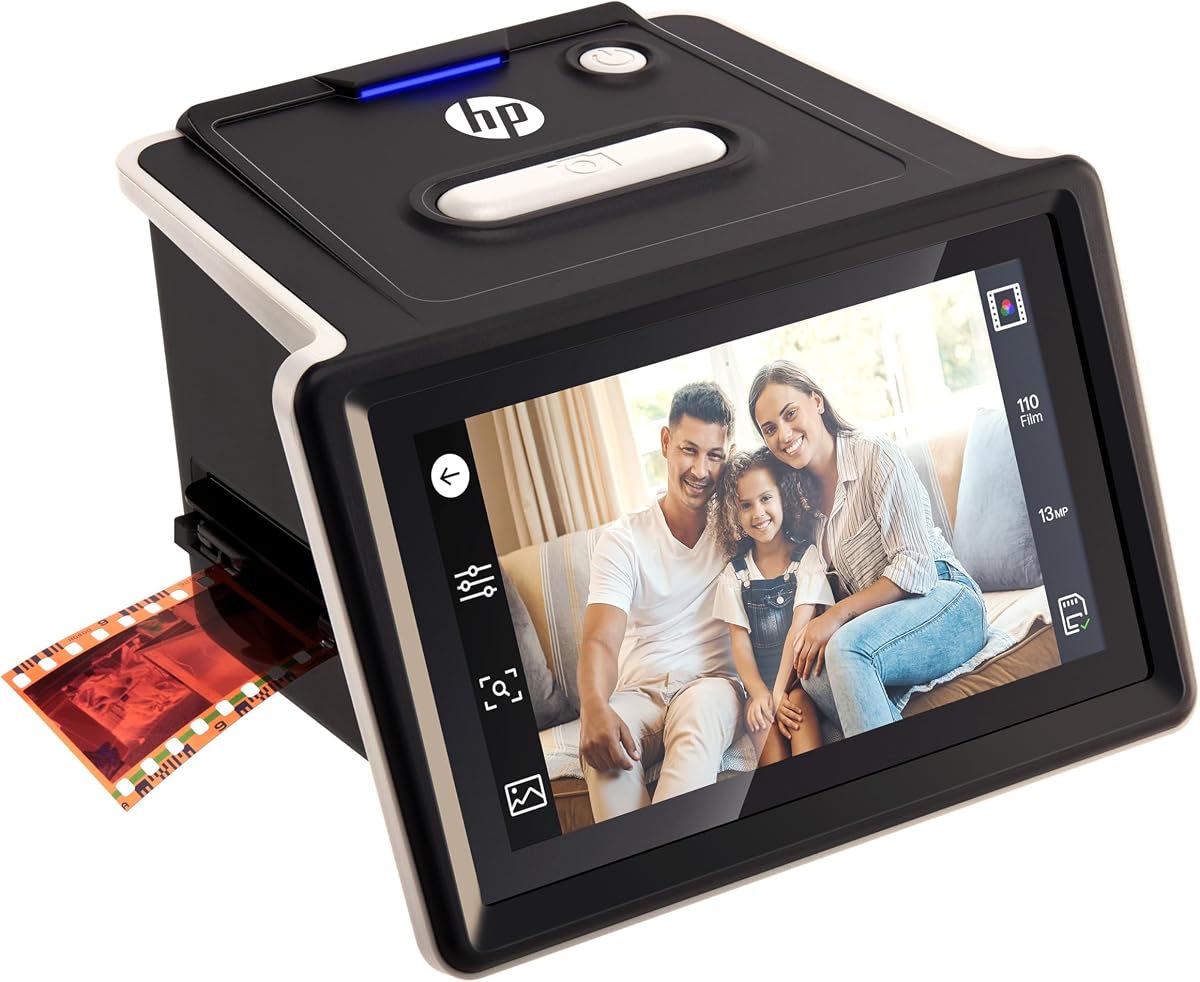
HP brings its reputation for quality to this scanner which focuses on a standalone workflow that does not require a computer. The interface is modern with a touchscreen that simplifies navigation and editing tasks significantly.
We may earn a commission when you buy through this link, at no additional cost to you.
The quick load tray allows you to process multiple slides faster than traditional manual feeders. This efficiency is valuable if you have large collections to digitize and want to get them done in a few sessions.
While the price is higher than average the build quality and feature set justify the investment for serious hobbyists. Some users may find the touchscreen slightly less responsive than physical buttons in certain lighting conditions.
For those who want a polished and efficient scanning experience this model offers a premium feel and reliable results. It is a strong choice for preserving valuable archives where speed and clarity are top priorities.
The all-angle LCD touch screen makes it easy to preview images and adjust settings without navigating menus.
The quick load tray system reduces downtime between scans making it ideal for handling large batches of film.
We may earn a commission when you buy through this link, at no additional cost to you.
This KODAK unit is versatile because it covers a wide range of film types including the rarely supported 8mm format. The inclusion of multiple adapters ensures that you can handle most old slides and negatives found in attic boxes.
We may earn a commission when you buy through this link, at no additional cost to you.
The built-in display is bright and adjustable making it easy to see your scans even in a well lit room. You can edit RGB and resolution directly on the device which keeps the process contained without external tools.
One downside is the smaller screen compared to newer models which can make editing text or tiny details more difficult. However the convenience of a complete kit with cables and brushes makes it a good value for starters.
If you have a mixed collection including rare film types this scanner provides a practical solution without needing multiple devices. It is a solid choice for casual users who want to preserve diverse media formats easily.
Supports 35mm 126 110 Super 8 and 8mm film covering almost all common vintage formats you might find.
The box includes power and HDMI cables as well as a cleaning brush to keep your scanner ready for use.
We may earn a commission when you buy through this link, at no additional cost to you.
This specialized device is built specifically to convert 8mm and Super 8 movie reels into digital MP4 files. It uses an 8MP sensor to capture frames and save them as video files that you can play on any modern device.
We may earn a commission when you buy through this link, at no additional cost to you.
The process involves loading the film reel and following the on-screen prompts to align frames correctly. You can adjust exposure and tint directly on the device to ensure the video looks as good as possible.
One important limitation is that it does not capture audio so any sound recorded on the film will be silent in the output. This is a trade-off for the simplicity of converting home movies without complex editing software.
If your goal is to digitize old home movies quickly this unit simplifies the task significantly. It is perfect for creating video backups of family gatherings that are stored on physical film reels.
Designed to handle 8mm and Super 8 film reels allowing you to convert full length movies easily.
The scanner saves frames as MP4 video files ready for sharing on social media or streaming platforms.
We may earn a commission when you buy through this link, at no additional cost to you.
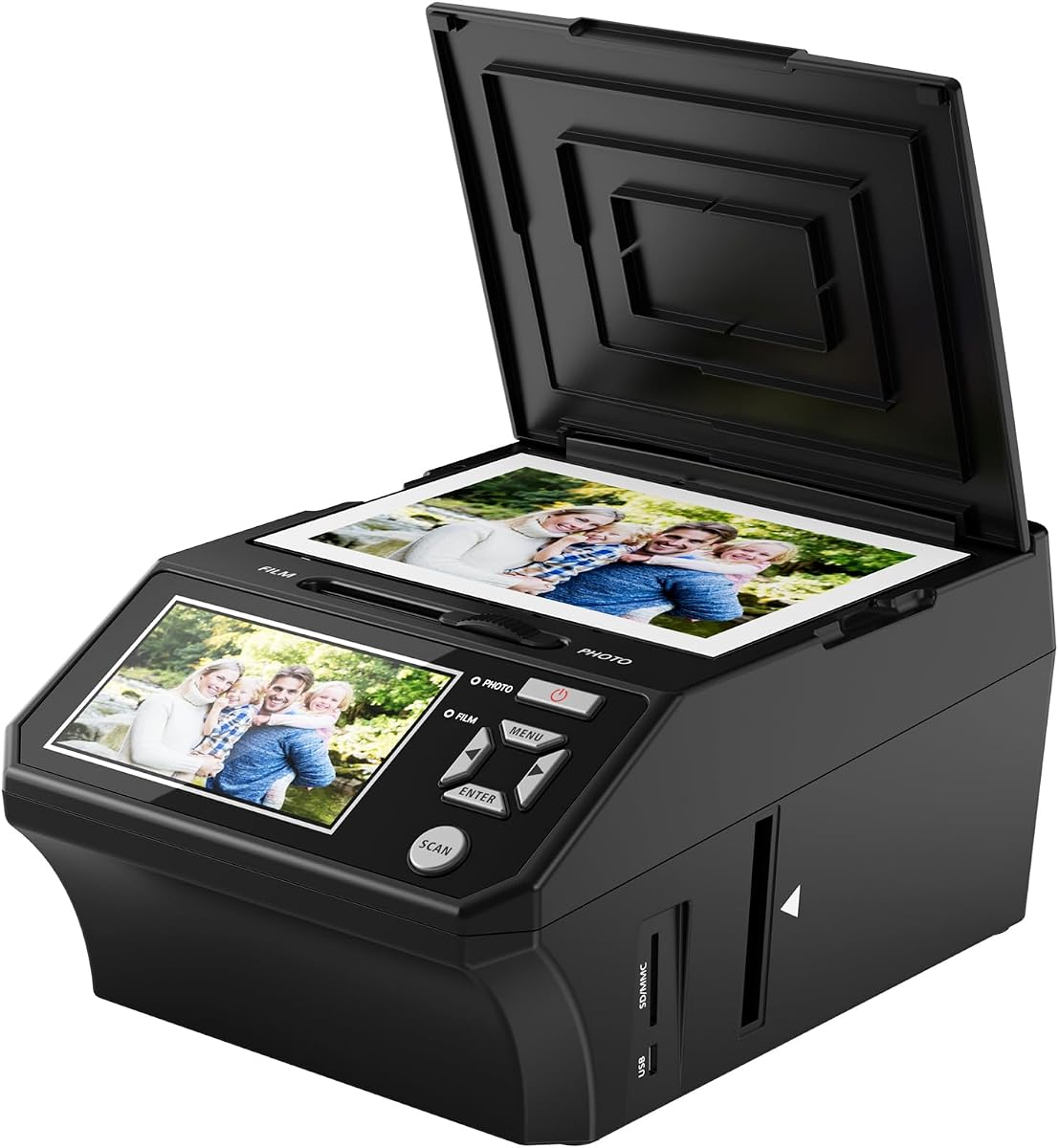
This scanner stands out because it can handle both film negatives and printed paper photos which adds versatility to your digitization setup. It comes with an SD card already so you can start scanning immediately upon unboxing.
We may earn a commission when you buy through this link, at no additional cost to you.
The large display makes it easy to see exactly what you are capturing and to edit images on the fly. It is designed to be completely standalone meaning you do not need any drivers or software installed on a computer.
A strong point for this model is the three year warranty which offers peace of mind for long term use. However the included memory is small so you may need to buy a larger card if you plan on scanning hundreds of images.
For families with mixed media such as slides and printed prints this unit provides a convenient all-in-one solution. The ease of use and included accessories make it a great gift for parents or grandparents.
Converts 35mm slides film negatives and printed photos like 3R and 4R into high quality JPEG files.
Includes an 8GB SD card and all necessary cables so you can begin preserving memories right away.
We may earn a commission when you buy through this link, at no additional cost to you.
The standout feature of this model is the large seven inch display which doubles as a digital picture frame when not scanning. This allows you to enjoy your digitized photos on the device itself without needing a computer.
We may earn a commission when you buy through this link, at no additional cost to you.
The quick feeding tray ensures that you do not have to reposition each frame manually which speeds up the process significantly. It supports the common film formats and provides intuitive controls for resizing and adjusting images.
One limitation is that it caps at 32GB SD cards which may fill up faster than the 128GB support on some competitors. This means you might need to transfer files to a computer more often to free up space.
If you value the ability to preview and share your photos on a big screen this scanner is a great option. It is particularly useful for those who want to display their scanned memories right after conversion.
The larger screen offers better visibility for editing and can be used as a digital frame later.
Continuous scanning reduces manual effort and helps you process large collections more quickly.
We may earn a commission when you buy through this link, at no additional cost to you.
This model offers an affordable entry point into film digitization while still providing essential features like a large LCD screen and HDMI output. It is perfect for those who want to try converting slides without a high investment.
We may earn a commission when you buy through this link, at no additional cost to you.
It uses a Type-C USB connection which is convenient for modern computers that have replaced older USB ports. The included HDMI cable allows you to connect directly to a TV for viewing results on a larger display.
Internal memory is small so you will rely heavily on an external SD card which is not included in the box. The build is functional but may not be as durable as higher priced models over many years of use.
If you are looking for a cost effective way to start archiving your film this is a solid starting point. It covers the basics well and includes the necessary accessories to get scanning right away.
Low cost makes it an attractive choice for beginners who want to digitize memories without spending much.
Type-C USB and HDMI ports ensure compatibility with modern TVs and computers without extra adapters.
We may earn a commission when you buy through this link, at no additional cost to you.
One of the strongest aspects of this scanner is its extended warranty coverage which provides significant long term security for buyers. It offers high resolution scanning and supports Super 8 slides along with standard negative formats.
We may earn a commission when you buy through this link, at no additional cost to you.
The gallery mode feature lets you use the device as a digital frame when you are not actively scanning images. This adds value by allowing you to display your preserved memories on the unit itself.
You will need to purchase an SD card separately but the device supports up to 64GB which is sufficient for most home archives. The Type-C USB connection ensures that transferring files to your computer is quick and easy.
This scanner is recommended for those who prioritize warranty support and want a reliable device for regular use. It balances performance and protection well and is a good fit for preserving valuable family history.
A 36 month warranty offers superior peace of mind compared to the standard one year period on most scanners.
Transform the device into a digital frame to showcase your photos to visitors without needing a computer.
We may earn a commission when you buy through this link, at no additional cost to you.
This HP scanner focuses on ease of use with a large touchscreen that makes editing and previewing simple for non technical users. The quick feed tray helps streamline the scanning process for those with larger collections of slides.
We may earn a commission when you buy through this link, at no additional cost to you.
It offers basic editing tools directly on the device so you can crop or adjust scans without needing external software. The display is vibrant and provides a clear view of your photos as you work through them.
The resolution is lower than some competitors but this is often acceptable for casual use and web sharing. The main trade-off is that advanced photographers might want more control over color and exposure adjustments.
For anyone seeking a user friendly device that requires little setup this model is a great fit. It allows you to focus on the memories rather than complex technical settings and delivers reliable digital files.
The 7 inch touch display simplifies navigation and editing making it accessible for users of all ages.
The quick feed tray and on device tools help you finish scanning sessions faster with less manual effort.
We may earn a commission when you buy through this link, at no additional cost to you.
Selecting the right scanner involves considering the film formats you own the desired resolution and how you plan to store the final files.
Check which film types the device can handle as some only support 35mm while others include 110 126 Super 8 or 8mm. If you have mixed collections ensure the unit comes with adapters for each type to avoid buying extra tools later.
Prioritize scanners that support all your specific film formats to ensure you can digitize your entire archive without needing multiple devices.
Higher resolution sensors capture more detail from old film which is important if you plan on printing large copies or cropping images. Look for models with at least 20MP interpolation to preserve fine textures and reduce graininess.
Choose a higher resolution option if you want to maintain maximum clarity for future printing or restoration projects.
Standalone scanners allow you to digitize without connecting to a computer which is helpful if you prefer not to install software or have a limited desk setup. These units save directly to SD cards and often have built-in displays for preview.
Select a standalone model if you value portability and want a simple workflow that does not require a laptop.
A larger LCD screen makes it easier to see your scans and adjust settings without squinting. Look for displays at least five inches across and consider models with touchscreen controls for a more modern experience.
Prioritize a large clear screen to ensure you can verify your images easily during the scanning process.
Devices with HDMI and USB-C connections offer more flexibility for transferring files and viewing them on external screens. Having multiple ports ensures you can connect to modern TVs and computers without needing older cables.
Look for USB-C and HDMI ports to ensure compatibility with your current tech setup and viewing options.
Built-in editing tools allow you to fix brightness color and orientation directly on the device. This can save time compared to using software later but check if the options are sufficient for your needs.
Choose a unit with onboard editing if you want to correct minor flaws immediately without using computer software.
Most scanners save to SD cards so ensure the device supports the capacity you need such as 64GB or higher. Some units include a card but many do not so factor in the cost of purchasing one separately.
Verify the maximum SD card size supported and plan to buy a card if it is not included in the package.
Electronic devices can fail over time so a longer warranty provides protection for your investment. Some brands offer up to three years of coverage which is a significant advantage over the standard one year.
Check the warranty length and customer support options to ensure you are covered if the device encounters issues.
To get started place the scanner on a flat stable surface and plug it into a power source. Insert the appropriate adapter for your film type such as a slide holder or negative tray and load the film carefully.
Turn on the device and select the correct film type on the menu screen. Preview the image on the display and adjust settings like brightness or color before pressing the scan button to save the file.
Keep the scanner clean by using the included brush to remove dust from the light box before each session. Store the unit in a dry place away from direct sunlight to ensure its components last as long as possible.
No most of the models reviewed are standalone devices that allow you to scan and save directly to an SD card. You can view and edit images on the built-in screen without needing any software installed on a computer.
Only specific models like the Magnasonic and KODAK SCANZA include adapters for Super 8 film. Most standard scanners are designed for 35mm 110 and 126 formats so check the product details carefully.
These devices typically save images as JPEG files which are compatible with most computers and smartphones. This format is widely supported and easy to share online or print for physical copies.
In most cases the SD card is not included in the box so you will need to purchase one separately. Always verify the package contents on the listing page to know exactly what accessories are provided.
Yes many of the units come with an HDMI cable or port that lets you view your scanned images on a television screen. This feature is great for sharing memories with family during gatherings.
Use the soft brush included in the kit to gently wipe dust from the light box and sensors before scanning. Regular cleaning ensures that your images remain clear without unwanted speckles or marks.
Our top picks include the KODAK Slide N Scan for overall value the Magnasonic for Super 8 support and the HP Film Scan for a premium standalone experience. Each of these models offers distinct benefits depending on your specific needs.
When choosing prioritize the resolution you need the film formats you have and how you want to view your final images. Standalone features and large screens make the process much smoother for users of all skill levels.
Remember that prices and availability change frequently so always check the current listing before buying. Taking a moment to verify the latest details ensures you get the best deal for your digitization project.