
Alstar Laser Collimator Alignment for Marca Newtonian Telescopes 1.25 Inch
4.5Editor score
Includes 1.25 inch fit
Seven adjustable brightness levels
Solid metal construction body
Choosing the right laser collimator for telescope alignment is essential for Newtonian reflectors. A good tool ensures precise optical alignment for sharper views and better performance during stargazing sessions.
We compared ten highly rated models based on construction quality, compatibility, laser brightness, and ease of use. Each entry offers unique features to suit different budgets and telescope setups effectively.
Each pick highlights key strengths and ideal users. Prices and availability change frequently, so verify current details on Amazon before purchasing to ensure you get the best deal for your needs.
4.5Editor score
4.7Editor score

As an Amazon Associate we earn from qualifying purchases.
The table below provides a side-by-side comparison of all ten laser collimator options. Review specifications and features to find the model that best fits your telescope and alignment needs.

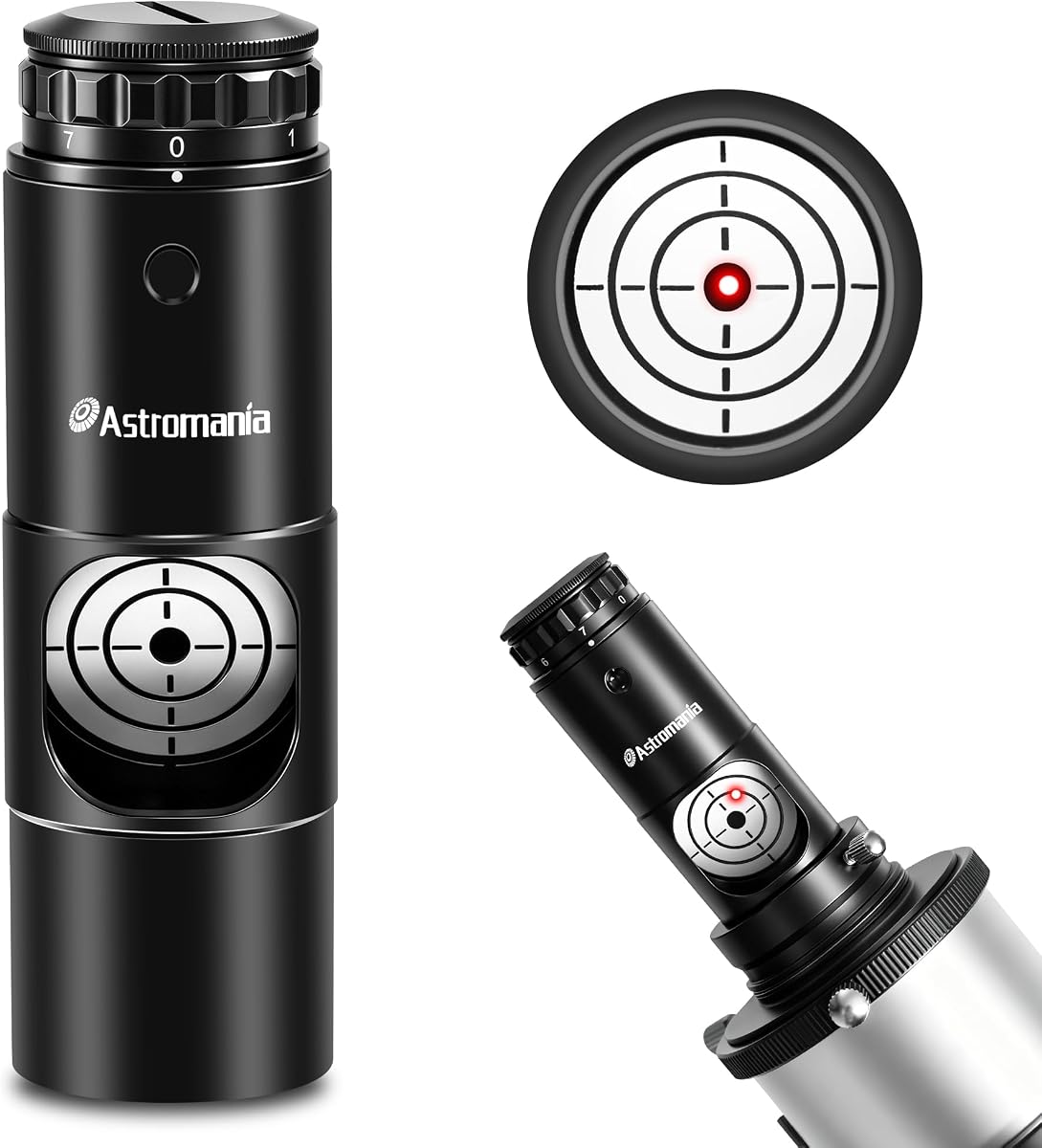


The Astromania Laser Collimator offers reliable alignment for Newtonian telescopes with a 4.5 star rating. It features both 1.25 and 2 inch adapters for broad compatibility.
We may earn a commission when you buy through this link, at no additional cost to you.
Seven brightness levels allow adjustment for different environments, and the anodized aluminum body resists wear. The side window helps monitor reflection accuracy without extra tools.
Battery replacement requires unscrewing a cap which might be tight for some users. Over time minor calibration drifts may occur but are fixable with adjustment screws.
Ideal for beginners and intermediate astronomers seeking a versatile tool. Its combination of adaptability and durability makes it a strong choice for consistent collimation.
The removable 2 inch adapter ensures compatibility with both standard 1.25 inch and 2 inch focusers, making this collimator a flexible tool for upgrading telescope systems.
With seven adjustable brightness levels the red laser beam remains visible in bright rooms or under dark skies, ensuring accurate alignment regardless of observing conditions.
We may earn a commission when you buy through this link, at no additional cost to you.
This Astromania model is designed for 1.25 inch focusers and provides accurate alignment quickly. Its 4.5 star rating reflects consistent performance for budget-conscious users.
We may earn a commission when you buy through this link, at no additional cost to you.
Seven brightness levels ensure visibility in various lighting conditions. The anodized aluminum body offers durability while the included battery allows immediate use out of the box.
Lacking a 2 inch adapter limits use with larger focusers. Battery caps are small and may need a tool for removal during replacements.
Perfect for entry level reflector owners using 1.25 inch accessories. Its simplicity and low cost make it an excellent starting point for collimation tasks.
The lightweight compact body fits easily in observing kits allowing astronomers to carry it anywhere from backyard setups to remote dark sky sites.
Seven brightness settings let users fine tune the laser intensity to suit different environments ensuring the beam remains visible without causing glare.
We may earn a commission when you buy through this link, at no additional cost to you.
The SVBONY Laser Collimator supports both 1.25 and 2 inch focusers with a removable adapter. Its 4.5 rating indicates reliable accuracy for Newtonian telescope alignment.
We may earn a commission when you buy through this link, at no additional cost to you.
Seven brightness levels and a triple cemented lens ensure stable projection. The solid metal body promises long term use with clear step by step instructions included.
The adapter requires installation and may add slight weight. Battery inclusion is not specified so check before expecting immediate use.
Ideal for users upgrading to 2 inch eyepieces. This collimator grows with your telescope ensuring you do not need a new tool after hardware upgrades.
The triple cemented lens design improves stability of the red dot, reducing wobble and ensuring more precise alignment results over time.
Including a 2 inch adapter means users upgrading from 1.25 inch focusers avoid buying a separate calibrator saving time and additional costs.
We may earn a commission when you buy through this link, at no additional cost to you.
This bundle pairs the SVBONY collimator with a 62 degree aspheric eyepiece for lunar and deep sky targets. It offers both alignment and viewing upgrades in one package.
We may earn a commission when you buy through this link, at no additional cost to you.
Seven brightness levels suit any light condition. The super wide angle eyepiece enhances detail and definition across the entire field of view.
As a new product customer reviews are not available yet. The eyepiece weight might be a consideration for smaller mounts.
Perfect for users seeking both alignment and viewing improvements. This bundle adds value by combining collimation with a high quality wide field eyepiece.
The 62 degree apparent field of view provides an unforgettable space feeling with maximum detail and definition across the entire viewing area.
Combining collimation and eyepiece needs into one purchase saves money and simplifies setup for astronomers new to reflector telescopes.
We may earn a commission when you buy through this link, at no additional cost to you.
The Alstar Collimator is pre-adjusted and easy to use for beginners. Its 4.5 rating highlights simplicity and quick accurate collimation in a few minutes.
We may earn a commission when you buy through this link, at no additional cost to you.
Seven brightness levels adapt to different light conditions. Metal construction ensures durability and clear step by step instructions make alignment straightforward.
Battery exclusion means an extra purchase is needed. The lack of a 2 inch adapter limits compatibility to standard focusers.
Ideal for newcomers seeking straightforward alignment tools. Its pre-adjusted setup and clear guides reduce the learning curve for new telescope users.
The laser comes fully adjusted from the factory, allowing immediate use for basic alignment tasks without requiring initial user calibration.
Precise instructions in German and English provide clear guidance for newcomers, ensuring even those new to astronomy can align optics accurately.
We may earn a commission when you buy through this link, at no additional cost to you.
This Alstar model includes a 2 inch adapter for dual compatibility. With a 4.0 rating it offers solid performance for Newtonian telescopes at a reasonable price.
We may earn a commission when you buy through this link, at no additional cost to you.
Seven brightness levels and a triple cemented lens ensure stable projection. Pre-calibrated setup and included battery allow quick deployment.
Some users report minor adapter fit issues. Ratings suggest it may not be as precise as premium options.
Great for users needing dual size compatibility on a budget. Its balance of features and affordability makes it a practical choice for general use.
The collimator comes pre-calibrated with three 120-degree adjustment openings for fine-tuning, ensuring reliable alignment right out of the box.
Built with premium metal materials the body ensures enhanced durability and stability during handling and transport to dark sky sites.
We may earn a commission when you buy through this link, at no additional cost to you.
This SVBONY collimator bundles a phone adapter for astrophotography. With a 4.4 rating it helps capture images while aligning optics for sharp results.
We may earn a commission when you buy through this link, at no additional cost to you.
Seven brightness levels and a 2 inch adapter ensure versatile use. The phone adapter fits many brands supporting 25 to 48mm eyepiece diameters.
The phone adapter adds weight to the setup. It does not fit 2 inch eyepieces which may limit advanced setups.
Ideal for smartphone astrophotographers needing alignment and capture tools. This bundle simplifies the workflow for beginners entering digital astronomy.
The clamping mechanism supports most mobile phones allowing direct capture through eyepieces for easy astrophotography without extra mounts.
Adjustable locking mechanism with steel bolt protects phones with high density EVA pads ensuring secure fit during imaging sessions.
We may earn a commission when you buy through this link, at no additional cost to you.
This bundle pairs a laser collimator with a Cheshire eyepiece. With a perfect 5.0 rating it offers versatile alignment tools for both day and night use.
We may earn a commission when you buy through this link, at no additional cost to you.
The Cheshire eyepiece needs no batteries and works during daytime for secondary mirror alignment. The laser provides night alignment with seven brightness levels.
Combined price is higher than individual units. Cheshire eyepieces have limitations in low light compared to lasers.
Ideal for users wanting comprehensive alignment tools. This combination ensures alignment can be done anytime without worrying about battery levels.
The Cheshire eyepiece has no batteries needed making it reliable for daytime secondary mirror collimation when ambient light aids alignment.
Combining laser for night and Cheshire for day provides complete optical alignment flexibility regardless of time or weather conditions.
We may earn a commission when you buy through this link, at no additional cost to you.
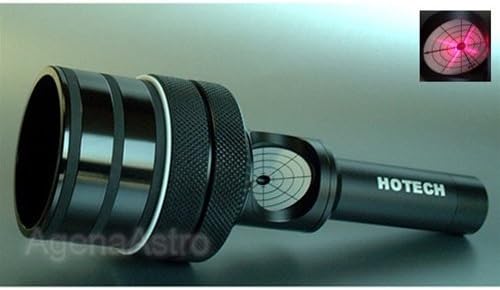
The HoTech SCA Laser Collimator uses patented self-centering adapter technology to eliminate slop and off-axis installation issues. Its 4.7 rating reflects exceptional precision.
We may earn a commission when you buy through this link, at no additional cost to you.
SCA technology ensures precise and repeatable installation across brands. Built-in CR123 battery supports use without extra purchases.
Higher cost may deter casual users. Heavier build may require sturdier mounting setups.
Best for serious astronomers prioritizing accuracy. This tool solves fundamental alignment problems with innovative design for consistent professional-grade results.
The SCA mechanism allows precise and repeatable installation in all brands of 1.25 inch and 2 inch telescope focusers, avoiding off-axis issues.
Unlike traditional collimators that suffer from installation gaps the SCA design ensures tight tolerances and optimal alignment along the optical axis.
We may earn a commission when you buy through this link, at no additional cost to you.
The Ocal Pro V4.0 Electronic Collimator offers software-guided calibration circles for pixel-level accuracy. Its design suits both Newtonian and Schmidt Cassegrain telescopes.
We may earn a commission when you buy through this link, at no additional cost to you.
Built-in software enables quick optical axis adjustments with factory-centered precision. Portable design supports field adjustments and mobile astronomy setups.
Lacks customer ratings as it is new. Complexity may challenge users seeking simple solutions.
Ideal for tech-savvy astronomers needing advanced precision. This tool combines modern software capabilities with portable design for professional alignment results.
Built-in software-guided calibration circles enable quick and precise optical axis adjustments with factory-centered pixel-level accuracy for imaging sessions.
The smartphone compatible design allows seamless integration with mobile devices for enhanced control and visibility during field adjustments.
We may earn a commission when you buy through this link, at no additional cost to you.
Selecting the right laser collimator depends on your telescope type and alignment needs. Use this guide to compare key factors and find the best tool.
Ensure the collimator fits your telescope's focuser size. Some models support only 1.25 inch focusers while others offer adapters for 2 inch compatibility.
Check if the package includes adapters. Universal compatibility reduces future costs when upgrading telescope components.
Adjustable brightness ensures visibility across varying light conditions. Seven levels are common and allow fine-tuning for bright rooms or dark skies.
Higher brightness helps during daytime alignment. Lower settings preserve night vision and reduce eye strain.
Solid metal bodies and anodized aluminum resist wear during travel. Durable construction maintains calibration over time compared to plastic alternatives.
Look for sealed adjustment ports. These protect internal mechanisms from dust and accidental misalignment.
Most collimators use CR2032 batteries; some use CR123. Check if the battery is included to avoid delays upon arrival.
Easy battery replacement caps are preferable. Complex caps may hinder quick changes during field sessions.
Collimators with three 120-degree adjustment screws allow fine-tuning. Sealed ports prevent accidental shifts but should be accessible when needed.
Self-centering adapters eliminate slop. Technologies like HoTech SCA offer precise and repeatable installation without off-axis errors.
Clear step-by-step guides help beginners navigate alignment steps. Look for models providing instructions in multiple languages.
Online video tutorials can supplement manuals. A tool with good documentation reduces learning curves significantly.
Bundles may include eyepieces, phone adapters, or Cheshire tools. These add value if you need comprehensive alignment and imaging options.
Consider if extra components suit your goals. Premium bundles are ideal for astrophotographers needing more than basic collimation.
Prices vary widely from budget-friendly to premium. Balance cost with features like adjustability, compatibility, and durability.
Higher prices often reflect better calibration stability. Consider long-term use versus upfront savings when making your choice.
Insert the collimator into the focuser, ensuring it is seated securely. If using an adapter, attach it firmly to prevent slipping during adjustments.
Turn on the laser and adjust brightness to suit the environment. Aim for a stable beam that hits the secondary mirror and reflects back.
Store the collimator in a padded case when not in use. Keep the lens and side window clean with a soft cloth to maintain clarity.
Proper collimation ensures the primary and secondary mirrors are aligned correctly. This alignment produces sharp, focused images across the entire field of view, essential for both visual observation and astrophotography.
Yes, but you need a bright laser. Some models offer adjustable brightness to make the beam visible in ambient light, though a Cheshire eyepiece is often better for daytime alignment.
Collimate before each observing session, especially if the telescope was transported. Regular alignment ensures optical precision and prevents star images from appearing distorted or blurry.
A 2 inch adapter allows the collimator to fit larger focusers. This ensures compatibility with 2 inch eyepieces and accessories without needing a separate collimator for upgraded setups.
Not all. Some models include CR2032 or CR123 batteries, while others do not. Check the product details before purchasing to avoid needing extra purchases.
Self-centering adapters, like HoTech SCA, eliminate slop in the focuser. They ensure the laser remains centered on the optical axis, improving precision and repeatability during alignment.
Check for beam stability and consistency. A high-quality collimator maintains calibration over time. If the beam drifts, recalibrate or consider a replacement with better build quality.
Laser collimators are primarily for reflectors. Refractors generally need less collimation. However, some bundles include Cheshire eyepieces that can help align refractor optics accurately.
This guide highlights ten top laser collimator options, from budget-friendly to high-tech solutions. Each offers unique features tailored to different telescope needs and budgets.
Prioritize focuser compatibility, build quality, and adjustability. A reliable collimator ensures sharp views and simplifies alignment for both beginners and experienced astronomers.
Prices and availability change frequently. Always verify the latest details and customer feedback before purchasing to ensure you choose the best model for your setup.