
AX210NGW DTK WiFi Card
4.5Editor score
Complete installation kit included
5dBi high gain antennas
Low-profile brackets provided
Compare the top 10 M2 WiFi Cards for laptops and desktops in October 2026, featuring Wi-Fi 6E and Wi-Fi 7 models with detailed specs and performance reviews.
Finding the right M2 WiFi card can transform your laptop or desktop performance. Whether you need faster streaming or lower latency for gaming, modern cards support tri-band connections and advanced Bluetooth standards.
We evaluated ten top-rated adapters based on chipset reliability, compatibility, and real-world throughput. Each product was selected for its ability to upgrade existing hardware without requiring complex system modifications or BIOS changes.
Every pick below highlights key features like speed ratings and driver support. Note that prices and availability fluctuate frequently, so verify current listings before purchasing to ensure you get the best deal available today.
4.5Editor score

4.8Editor score

4.6Editor score
This side-by-side comparison details the specifications and capabilities of the leading M2 WiFi adapters. Each entry includes core tech details to help you match the card to your specific hardware needs.
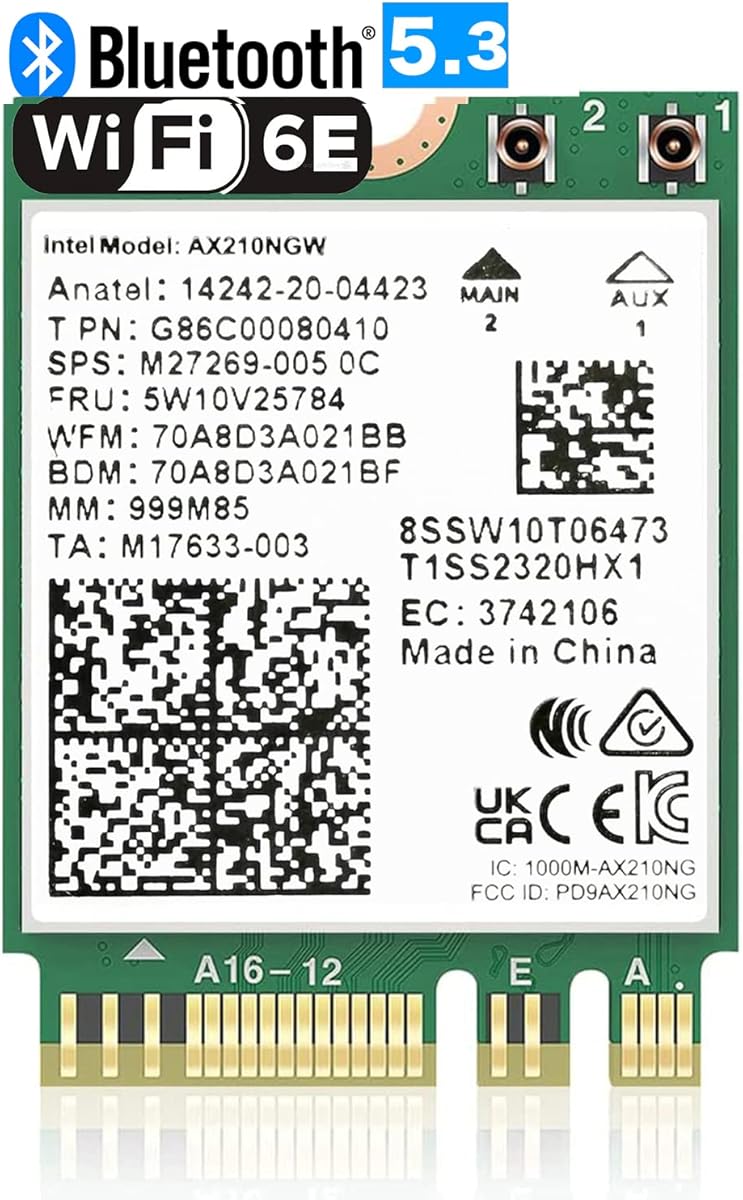


The Intel AX210 stands out as the top choice for modern connectivity. With a 4.8 rating, it delivers reliable tri-band Wi-Fi 6E performance that handles streaming and gaming with ease.
We may earn a commission when you buy through this link, at no additional cost to you.
Its inclusion of the 6GHz band ensures minimal interference in crowded wireless environments. The integrated Bluetooth 5.3 provides seamless peripheral connectivity for mice and headsets.
While driver installation is required, the official Intel tools make this straightforward. Users report consistent speeds and low latency that match or exceed more expensive alternatives.
Anyone seeking a balance of performance and value should prioritize this card. It transforms laptops into high-speed wireless hubs suitable for demanding workloads.
Access to the 6GHz band provides cleaner channels and higher throughput, reducing lag during video calls and gaming sessions significantly.
Bluetooth 5.3 ensures stable, energy-efficient connections for wireless devices, reducing the need for separate dongles or adapters.
We may earn a commission when you buy through this link, at no additional cost to you.
This DTK kit offers exceptional value for budget-conscious buyers. It includes the AX210 module plus all necessary hardware for installation, removing the guesswork from upgrades.
We may earn a commission when you buy through this link, at no additional cost to you.
The 5dBi high gain antennas improve signal range significantly compared to stock laptop antennas. Low-profile brackets ensure compatibility with desktop cases needing compact adapters.
While the RF cables are standard length, users with deep cases might need extensions. However, the included components make this one of the most complete upgrade kits available.
Buyers looking to save money without sacrificing Wi-Fi 6E capability will find this kit ideal. It delivers reliable performance at a fraction of the cost of branded solutions.
Having brackets and antennas included prevents extra shipping costs and ensures immediate compatibility with most standard M.2 slots.
High gain antennas extend wireless range, allowing devices to connect more reliably from distant rooms or across congested networks.
We may earn a commission when you buy through this link, at no additional cost to you.
The BE200 brings next-gen Wi-Fi 7 capabilities to compatible systems. With a 4.6 rating, it excels in gaming scenarios due to its ultra-low latency design and killer optimization.
We may earn a commission when you buy through this link, at no additional cost to you.
Multi-link operation (MLO) allows simultaneous connections across bands, preventing drops and improving throughput consistency. This ensures smooth 4K streaming and real-time communication.
Users must ensure their system has a 12th Gen Intel CPU or higher. For those meeting this requirement, the performance boost is substantial and worth the investment.
Gaming enthusiasts and professionals needing maximum speed should choose this premium option. It represents the cutting edge of wireless networking technology available today.
MLO aggregates multiple bands for increased bandwidth and stability, ensuring critical data packets never drop during high-demand usage.
Intelligent traffic prioritization minimizes lag by favoring gaming and streaming traffic over background downloads or updates automatically.
We may earn a commission when you buy through this link, at no additional cost to you.
This AX210 module delivers consistent tri-band speeds suitable for most modern laptops. Its 4.6 rating reflects reliability in handling simultaneous data streams without dropouts.
We may earn a commission when you buy through this link, at no additional cost to you.
The MU-MIMO technology ensures efficient data delivery to multiple devices, ideal for shared home networks. Support for Windows 11/10 ensures broad compatibility with current systems.
While drivers must be downloaded separately, Intel's official site offers stable builds. Users report quick installation and immediate recognition by the operating system.
Anyone needing a standard upgrade path should consider this module. It balances performance with ease of use, making it a safe choice for general consumers.
MU-MIMO allows multiple data streams to coexist, maximizing router capacity and reducing congestion on busy Wi-Fi networks.
WPA3 encryption provides robust protection for wireless data, ensuring secure connections against modern network threats effectively.
We may earn a commission when you buy through this link, at no additional cost to you.
This AX411 module is tailored for server-grade environments requiring reliable connectivity. With a perfect 5.0 rating, it demonstrates exceptional stability and minimal downtime over long periods.
We may earn a commission when you buy through this link, at no additional cost to you.
Killer optimization prioritizes critical tasks like video conferencing and file transfers. The tri-band design ensures interference-free operation even in dense data centers.
While primarily for servers, desktop users with compatible slots can also benefit from this reliability. Installation is straightforward for those familiar with M.2 E-key interfaces.
System administrators and power users should prioritize this card for robust wireless needs. It delivers consistent performance under heavy workloads with minimal configuration.
Built for continuous operation, this module maintains stable throughput even during peak usage, reducing the need for frequent maintenance.
Intelligent algorithms ensure latency-sensitive applications get priority bandwidth, preventing background processes from degrading user experience.
We may earn a commission when you buy through this link, at no additional cost to you.
This EDUP module bridges the gap for AMD users seeking Wi-Fi 7 performance. It supports both AMD and Intel platforms, a rare trait for newer wireless standards.
We may earn a commission when you buy through this link, at no additional cost to you.
The MT7925 chipset enables multi-link operation for faster speeds. With a 4.4 rating, it offers reliable performance for daily tasks and streaming when paired with compatible routers.
Drivers must be downloaded from the official EDUP site. Users should verify BIOS settings to ensure the M.2 slot allows key A/E interfaces properly.
Owners of AMD systems wanting future-proof connectivity should consider this card. It offers the speed of Wi-Fi 7 with broader chipset support than competitors.
Unlike many Wi-Fi 7 cards that are Intel-only, this model works with modern AMD CPUs, expanding upgrade options for gamers.
Bluetooth 5.4 provides enhanced stability and range, ensuring peripherals connect smoothly without interference from other wireless signals.
We may earn a commission when you buy through this link, at no additional cost to you.
EDUP delivers a reliable AX210 solution with strong user ratings. Its 4.8 rating indicates consistent performance and durability in various laptop environments.
We may earn a commission when you buy through this link, at no additional cost to you.
The WPA3 security support ensures modern encryption standards are met. Tri-band performance allows seamless switching between frequencies based on signal strength and congestion levels.
The module includes lifetime technical support, which adds value for users needing assistance during installation. Users should verify their laptop supports M.2 2230 A/E keys.
Anyone prioritizing stability and warranty coverage should consider this option. It offers solid performance without the premium price tag of branded OEM parts.
Lifetime support ensures help is available if driver issues arise, reducing downtime and frustration during initial setup phases.
Automatic switching between bands optimizes performance, ensuring the fastest available speed is used without user intervention or manual toggling.
We may earn a commission when you buy through this link, at no additional cost to you.
This BE200 adapter supports Linux and Windows effectively, offering broad OS compatibility for power users. Its 4.6 rating reflects successful deployment in diverse environments.
We may earn a commission when you buy through this link, at no additional cost to you.
5800Mbps theoretical speeds push the limits of current wireless standards. Users will need a Wi-Fi 7 router to fully leverage these maximum potential throughput numbers.
The card requires Intel 12th Gen or newer processors, limiting older system upgrades. For compatible machines, it provides a significant leap in network responsiveness.
Enthusiasts with modern Intel hardware should choose this card for speed. It offers a forward-looking upgrade that maintains performance relevance for years to come.
Support for Linux makes this a rare find for open-source enthusiasts needing cutting-edge wireless performance on non-Windows systems.
Gigabit speeds over wireless ensure large file transfers and 8K streaming happen without bottlenecks or buffering interruptions.
We may earn a commission when you buy through this link, at no additional cost to you.
The 9560NGW offers a budget-friendly path to modern connectivity for older laptops. With a 4.4 rating, it remains a solid choice for general browsing and streaming tasks.
We may earn a commission when you buy through this link, at no additional cost to you.
Dual-band support ensures stable connections in most household environments. While it lacks the 6GHz band, its 2.4GHz and 5GHz channels are sufficient for most standard internet usage.
Bluetooth 5.1 improves peripheral pairing range significantly compared to older 4.2 versions. The compact M.2 2230 factor fits most modern ultrabooks and mini-PCs easily.
Users on a strict budget should consider this reliable entry option. It provides essential upgrades without requiring expensive system overhauls.
An affordable upgrade that restores wireless performance to newer standards without breaking the bank for older systems.
Enhanced Bluetooth range ensures wireless mice and headsets maintain stable connections even when the device is placed further away from the laptop.
We may earn a commission when you buy through this link, at no additional cost to you.
BrosTrend offers a budget-friendly Wi-Fi 6 upgrade with solid performance. Its 4.4 rating shows consistent reliability for daily tasks in home and office settings.
We may earn a commission when you buy through this link, at no additional cost to you.
Dual-band AX1800 speeds ensure smooth streaming and web browsing. Linux kernel 6.5+ support makes this a viable option for open-source users needing modern wireless.
Bluetooth 5.2 provides wider device compatibility and better stability. While it lacks the 6GHz band, its 5GHz performance is efficient for most household needs.
Users needing a cost-effective upgrade should consider this module. It balances affordability with modern features, making it a practical choice for most consumers.
Strong compatibility with Linux systems ensures that open-source users can enjoy modern wireless speeds without extra configuration complexity.
Dual-band performance delivers stable speeds across frequencies, ensuring users get reliable internet access without expensive hardware overhauls.
We may earn a commission when you buy through this link, at no additional cost to you.
Selecting the right M2 WiFi card depends on hardware compatibility, Wi-Fi generation requirements, and budget. Below are key factors to ensure a successful upgrade.
Determine if you need Wi-Fi 6, 6E, or 7. Newer generations offer more bandwidth and lower latency but require compatible routers to function effectively.
Match the card to your router to maximize throughput. Buying a 7 card without a 7 router limits speed benefits significantly.
Most Intel cards require specific CPU generations. Be sure to check if your motherboard supports the card's protocol and BIOS requirements before purchasing.
Intel 12th Gen or newer is needed for Wi-Fi 7. Older systems may need legacy 5 or 6 adapters to avoid installation issues.
Modern adapters include Bluetooth 5.3 or 5.4 for better range and lower latency. Ensure your peripherals support these standards to fully utilize the upgrade.
Bluetooth integration eliminates the need for separate dongles. It is essential for users relying on wireless audio and input devices regularly.
Some kits include antennas and brackets for desktop use. Others require you to reuse existing ones or buy separate cables for signal transmission.
Check what hardware is included before ordering. Missing cables can delay your installation until additional parts are sourced and shipped.
Ensure drivers are available for your OS. Windows is universally supported, but Linux users should verify kernel version compatibility before buying a card.
Intel provides broad driver support for most versions. This reduces the friction of installation on various system configurations effectively.
M.2 slots come in various keys. A or E keys are standard for Wi-Fi. Confirm your slot key matches the card interface to prevent physical incompatibility.
Key mismatches prevent installation. Always check your laptop or motherboard manual to confirm the slot type before purchasing.
Intel cards offer high reliability and broad driver support. Third-party brands like EDUP offer cost-effective alternatives with decent warranty terms.
A reputable brand reduces the risk of faulty hardware. Look for lifetime technical support and warranty details when comparing options.
Premium cards offer next-gen speeds while budget options provide adequate Wi-Fi 5 or 6 performance. Balance your needs with what your current internet plan can use.
Avoid overspending on unused bandwidth. If your internet speed is under 1Gbps, a mid-range card is usually sufficient for home use.
To install, power down your device and locate the M.2 slot. Align the card with the slot and secure it with the mounting screw or bracket.
Boot into your OS and install drivers from the manufacturer website. Reboot to ensure the new card is recognized by the system.
Keep the area around the antenna ports clean to avoid signal loss. Regular updates ensure security patches are applied to the driver stack.
Not all cards work with every laptop. You must check your motherboard's M.2 slot key type and whether your BIOS allows third-party adapters. Intel cards often have CPU requirements.
Yes, to fully benefit from the 6GHz band, you need a Wi-Fi 6E router. Otherwise, the card falls back to 2.4GHz or 5GHz speeds.
Drivers are typically downloaded from the Intel or manufacturer website. You will need to manually install them after the card is detected by your system.
Yes, desktops with M.2 slots can use these cards. You may need to buy low-profile brackets and antennas to connect them properly to the case.
Wi-Fi 6E adds the 6GHz band for more spectrum and less interference. Standard Wi-Fi 6 only supports 2.4GHz and 5GHz frequencies.
They can improve connection quality and stability. If your router supports higher speeds, the new card can help your device reach those maximums.
Many modern Intel cards support Linux kernel versions 5.x and newer. However, you may need to compile or install specific drivers manually.
If you have newer peripherals, Bluetooth 5.3 offers better battery life and range. Older devices still work but may not benefit from the newer features.
The Intel AX210 remains the top choice for most users, balancing cost and performance. The BE200 offers a glimpse into the future for high-end gaming systems.
Prioritize compatibility before purchase. Ensure your hardware supports the new card's requirements to avoid returns or installation issues.
Always check current prices and availability before buying. Technology prices fluctuate frequently, so verify the listing details to get the best deal today.