
EVISTR 64GB Digital Voice Recorder
4.2Editor score
64GB high capacity storage
Voice activated recording
PCM intelligent noise reduction
This guide compares the top ten handheld recorders for journalists, evaluating audio quality, battery life, and portability to help you choose the perfect
Journalists need reliable audio tools that capture clear sound in any environment. A good handheld recorder offers high resolution, long battery life, and durable construction for field work.
We compared ten top models based on microphone quality, storage options, and ease of use. Our analysis focuses on features that matter most for reporting, interviews, and live sound capture.
Each pick highlights specific strengths and ideal use cases for professionals. Prices and availability change frequently, so verify current details before purchasing your next recording device.
4.2Editor score

4.7Editor score

4.4Editor score
The following table provides a side-by-side comparison of all ten selected recorders, highlighting key specifications to help you make an informed decision.




The Zoom H5 stands out as the top choice for journalists who need versatile recording capabilities. With a 4.7 rating, it excels in capturing complex audio scenarios thanks to its interchangeable capsule system.
We may earn a commission when you buy through this link, at no additional cost to you.
Its four-track simultaneous recording allows you to capture multiple sources independently. The included XYH-5 capsule provides excellent stereo imaging while reducing handling noise during field interviews.
While the price is higher than basic recorders, the flexibility justifies the investment. The safety net feature protects recordings from clipping, ensuring you never lose critical audio segments.
Journalists covering dynamic events will appreciate the XLR/TRS inputs for connecting external microphones. This recorder is the ultimate tool for professionals demanding broadcast-quality sound in the field.
The interchangeable capsules let you swap microphones for different environments, from intimate interviews to wide ambient recordings.
Simultaneous four-track recording gives you maximum flexibility in post-production to isolate and adjust individual audio sources.
We may earn a commission when you buy through this link, at no additional cost to you.
For journalists on a tight budget, the EVISTR L357 offers incredible value with 64GB of internal storage. It achieves a 4.2 rating by balancing cost and essential recording functionality for daily use.
We may earn a commission when you buy through this link, at no additional cost to you.
The voice activation feature automatically starts recording when sound is detected, saving battery and storage space. Its PCM intelligent noise reduction technology ensures clear audio even in noisy environments.
While it lacks the build quality of premium units, it delivers reliable performance for straightforward interviews and note-taking. The Type-C USB connection makes file transfer quick and convenient.
This recorder is perfect for entry-level reporters or secondary recording needs. Its simplicity and low cost make it an essential backup tool for any journalist's equipment bag.
Voice activation ensures you only record when someone is speaking, preserving battery life and storage for important content.
With 64GB built-in, you can store thousands of hours of audio without needing immediate data management or external drives.
We may earn a commission when you buy through this link, at no additional cost to you.
The Zoom H2 Essential delivers premium features like 32-bit float recording at a competitive price. Its 4.4 rating reflects its ability to capture flawless audio without manual gain adjustments.
We may earn a commission when you buy through this link, at no additional cost to you.
Nine selectable microphone patterns allow you to adapt to any interview setup. The three built-in microphones provide excellent stereo separation for ambient sound and dialogue.
While it lacks external inputs like the H5, it simplifies field recording significantly. You can set it and forget the gain settings, ensuring clip-free audio even with unexpected loud noises.
Journalists who prioritize simplicity and reliability will find this recorder indispensable. Its Bluetooth sync capabilities also allow for multi-unit setups, perfect for complex event coverage.
32-bit float recording ensures you never need to worry about clipping, as you can adjust levels after the recording is complete.
Select from nine different mic patterns to capture everything from narrow interviews to wide environmental soundscapes effectively.
We may earn a commission when you buy through this link, at no additional cost to you.
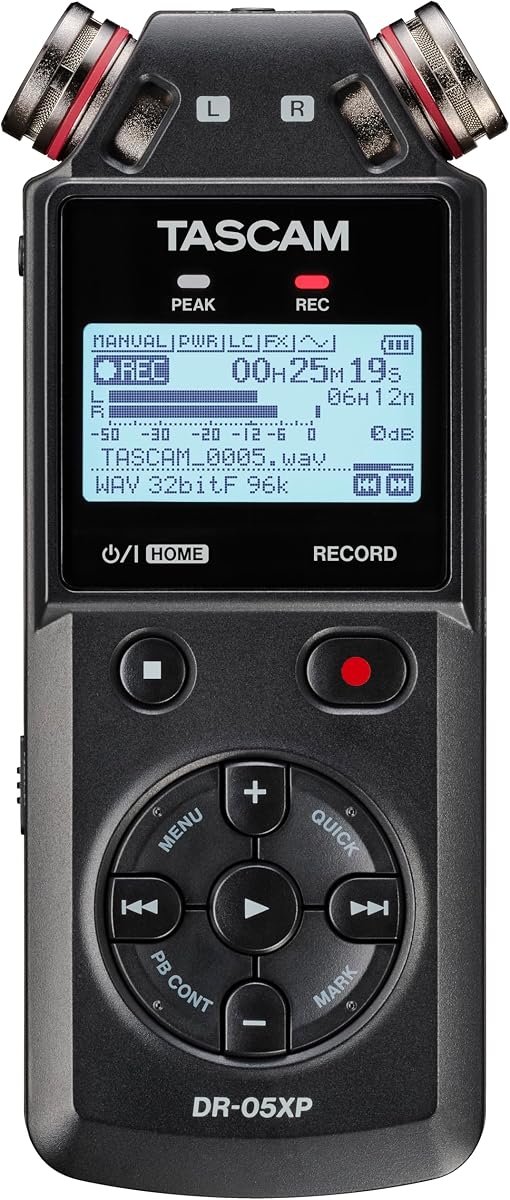
The TASCAM DR-05XP is a pocket-sized powerhouse that brings 32-bit float recording to a budget-friendly device. It earns a 4.2 rating for its surprising audio fidelity in such a small form factor.
We may earn a commission when you buy through this link, at no additional cost to you.
Its USB-C interface doubles as an audio interface, allowing you to record directly to a computer. This dual functionality makes it incredibly versatile for journalists who also need to do live streaming or interviews.
The omnidirectional microphones capture sound from all directions, making them ideal for ambient noise capture. However, the lack of XLR inputs limits its use with external professional microphones.
For reporters needing a lightweight backup or quick soundcheck tool, this recorder is perfect. Its battery life ensures it lasts through long days in the field without frequent recharging.
Use it as a standalone recorder or connect via USB-C to record directly to your computer for immediate editing.
Capture ambient sound and room tone effectively with microphones that pick up audio from every direction around the device.
We may earn a commission when you buy through this link, at no additional cost to you.
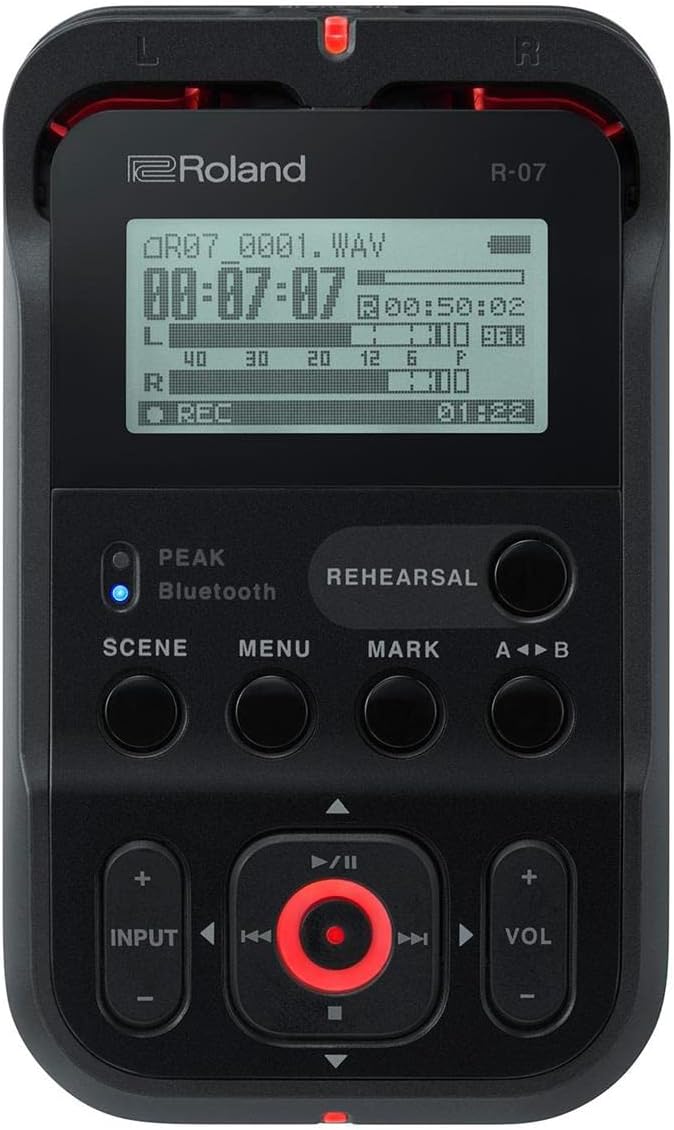
The Roland R-07 offers high-resolution audio recording with the convenience of Bluetooth control. Its 4.2 rating highlights its robust build and capability to handle professional audio tasks reliably.
We may earn a commission when you buy through this link, at no additional cost to you.
You can control and monitor recordings using your smartphone via Bluetooth, which adds flexibility during interviews. The built-in speaker allows for immediate playback without needing headphones.
While it uses standard AA batteries, it offers up to 16 hours of continuous recording. The simultaneous WAV and MP3 recording ensures you have a high-quality backup without extra steps.
Journalists who value wireless convenience will appreciate the control features. It remains a strong contender for those who need reliable high-fidelity recording with modern connectivity options.
Control the recorder and listen to audio via Bluetooth, allowing you to manage settings while holding the subject at a distance.
Run on standard AA batteries for convenience or use USB bus power when tethered to a laptop for extended sessions.
We may earn a commission when you buy through this link, at no additional cost to you.
The Tonfarb recorder is designed for simplicity and speed. With a 4.0 rating, it focuses on essential features like one-click recording and substantial internal storage for busy professionals.
We may earn a commission when you buy through this link, at no additional cost to you.
Even when powered off, you can start recording instantly with a side button. This feature ensures you never miss a sudden statement or important sound during field work.
The large screen makes navigation easy, and password protection keeps sensitive files secure. While audio quality is good, it is not as high-fidelity as professional-grade Zoom or TASCAM units.
For journalists who need a reliable backup device without complex settings, this is a solid choice. Its straightforward operation makes it ideal for quick dictation or casual interviews.
The one-click record feature lets you capture audio instantly without navigating menus, ensuring you never miss a moment.
Protect confidential recordings with password protection, keeping your audio files secure from unauthorized access.
We may earn a commission when you buy through this link, at no additional cost to you.
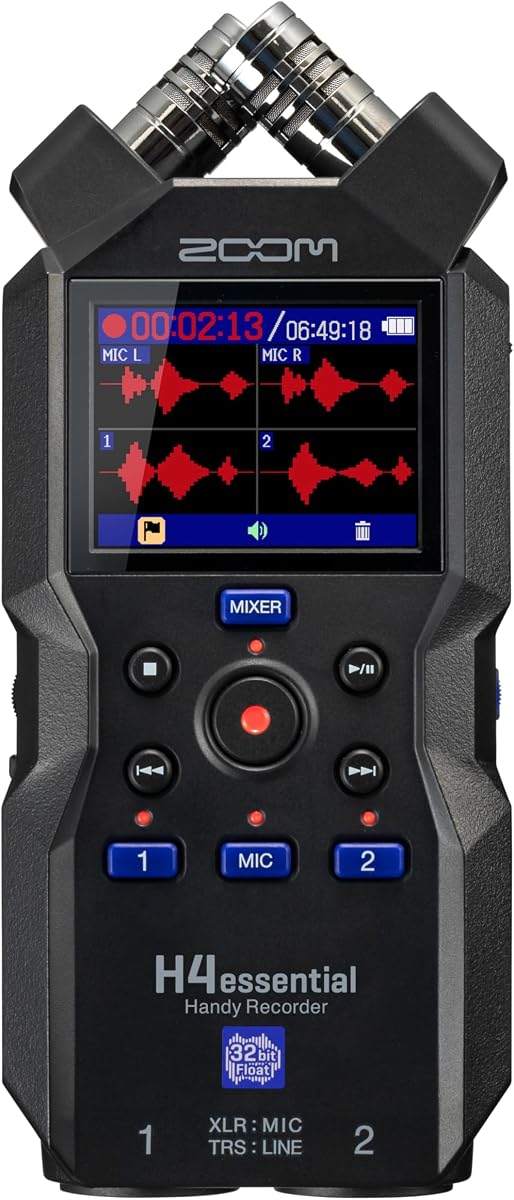
The Zoom H4 Essential is built for creators who need robust features for video and audio projects. With a 4.4 rating, it balances professional capabilities with ease of use.
We may earn a commission when you buy through this link, at no additional cost to you.
It features two XLR/TRS inputs, allowing you to connect external microphones or mixers directly. This makes it suitable for interviews where high-quality external mics are necessary.
The spoken menu guidance makes navigation easier, especially in field conditions. You can record to an SD card while simultaneously streaming via USB-C, providing a reliable backup system.
Journalists producing video content will appreciate its versatility. It acts as a central audio hub that integrates seamlessly with cameras and computers for comprehensive media production.
Connect professional XLR microphones directly to the recorder for superior audio quality in interviews and field reports.
Record locally to an SD card while streaming to a computer, ensuring you have a backup regardless of connection issues.
We may earn a commission when you buy through this link, at no additional cost to you.
The Pocket AI Voice Recorder transforms audio into actionable text instantly. With a 4.6 rating, it stands out for its powerful AI capabilities that go beyond simple recording.
We may earn a commission when you buy through this link, at no additional cost to you.
It provides automatic transcription and summarization of meetings and interviews. This saves hours of manual work for journalists who need quick access to key points from recordings.
The MagSafe compatible design allows you to attach it to your phone for hands-free recording. This is particularly useful when you need to take notes while listening to the recording.
For modern journalists needing rapid content turnaround, this device is revolutionary. Its long battery life ensures it lasts through multiple days of meetings without constant charging.
Automatic transcription and summaries let you quickly review interviews without listening to every minute of audio.
Attach the device to your phone with MagSafe for stable, hands-free recording that integrates seamlessly with your workflow.
We may earn a commission when you buy through this link, at no additional cost to you.
The Zoom H1 Essential is a compact device designed for capturing clear stereo audio effortlessly. With a 4.0 rating, it offers a streamlined experience for creators needing high-quality sound.
We may earn a commission when you buy through this link, at no additional cost to you.
Its USB-C connection allows it to double as a microphone for livestreams or calls. This dual-purpose functionality is ideal for reporters covering events remotely or online.
The recorder is small enough to fit in a pocket, making it ideal for discreet recordings. It captures natural stereo sound that is significantly better than smartphone recordings.
For journalists needing a lightweight, affordable primary or backup recorder, the H1 Essential is a strong option. It delivers professional audio results without the complexity of larger units.
Fits easily in a pocket, allowing you to keep it ready for spontaneous interviews or field recordings.
Connect via USB-C to use as a high-quality microphone for remote interviews or live broadcasts.
We may earn a commission when you buy through this link, at no additional cost to you.
The Tascam dr-40 offers a classic recording experience with robust build quality. With a 4.6 rating, it remains a reliable choice for professionals who value straightforward functionality.
We may earn a commission when you buy through this link, at no additional cost to you.
It includes XLR inputs and a 4-track recording system. This allows for flexible setups where you can record multiple audio sources independently for later mixing.
While it is heavier than modern compact recorders, its durability is unmatched. The traditional layout provides physical buttons and knobs that allow for tactile control without screen reliance.
Journalists who prefer physical controls and need multi-track recording capabilities will find this recorder valuable. It serves as a durable workhorse for long-term field use.
Tactile knobs and buttons allow for quick adjustments without digging through digital menus during critical moments.
Connect professional XLR microphones for superior sound quality that meets broadcast standards.
We may earn a commission when you buy through this link, at no additional cost to you.
Choosing the right recorder depends on your specific fieldwork needs. This guide breaks down the essential factors to consider.
High-resolution audio ensures your recordings sound clear and professional. Look for devices that support 24-bit or 32-bit float recording to avoid distortion.
Prioritize recorders with high sample rates and floating-point capabilities for the best dynamic range.
The built-in microphones define the initial capture quality. Omnidirectional mics are great for ambient sound, while cardioid mics focus on the speaker.
Choose a recorder with adjustable patterns to adapt to different interview scenarios effectively.
Journalists often need to connect external microphones. Ensure the device has XLR or TRS inputs for professional audio gear.
USB-C connectivity is essential for quick file transfers and direct recording to computers.
Long recording sessions require reliable power sources. Look for devices offering at least 10 hours of continuous recording on a single charge.
Consider models that use standard AA batteries for easy replacement in the field.
High-quality audio files consume storage space quickly. Internal storage of 64GB or more is ideal for daily use.
Support for expandable SD cards ensures you can store hours of recordings without running out of space.
In fast-paced environments, intuitive controls are vital. Physical buttons allow for faster operation than touch screens.
A clear display and straightforward menu navigation reduce errors during recording.
Field work often involves travel and rough handling. A compact and lightweight design reduces fatigue during long days.
Choose models with robust build quality to withstand the rigors of travel and outdoor use.
Many recorders offer companion apps for file management. AI features like transcription can significantly speed up your workflow.
Evaluate the software support and cloud integration options provided by the manufacturer.
Always perform a test recording before heading out. Check levels and ensure the device is charged to avoid missing critical moments.
Store your recordings on a secure drive after each session. Backing up data is crucial for protecting valuable interview content.
Clean the microphones and casing regularly. Avoid exposure to extreme temperatures to extend the lifespan of your equipment.
Ideally, you want a recorder that lasts at least 10 to 15 hours on a single charge. This ensures you can work through long days without needing to swap batteries constantly.
If you plan to use professional microphones, XLR inputs are essential. For internal mics only, they are not strictly necessary but add versatility.
High-quality audio files are large. Aim for at least 64GB of internal storage or support for large SD cards to avoid frequent management.
32-bit float recording allows you to capture audio at any volume level without clipping. You can adjust levels safely in post-processing.
Yes, some modern devices include built-in AI features for automatic transcription and summarization. This speeds up the process of turning audio into text.
Many modern recorders have USB-C or USB audio interface capabilities. This allows you to connect to a computer and use it as a microphone for streaming.
The Zoom H5 stands out for its versatility and professional features, while the EVISTR L357 offers exceptional value for budget-conscious buyers.
Consider your specific needs regarding connectivity, storage, and battery life when making your final decision.
Always check current availability and warranty details before purchasing to ensure you get the best deal available.